
Table of Contents
Introduction
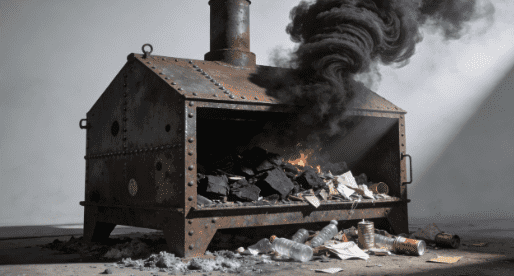
In modern waste management, the reliance on outdated garbage incinerators has become a growing concern. Cities and industrial facilities that still operate old units face significant challenges ranging from operational inefficiency to environmental hazards. As urban populations increase and environmental regulations become stricter, the limitations of traditional incineration technologies are increasingly evident.
Outdated incinerators often fail to completely combust waste, emit harmful gases, and require frequent maintenance. These issues not only raise operational costs but also pose a serious threat to public health and the environment. Upgrading to modern incinerators is no longer optional—it is a necessity for sustainable waste management.
Inefficient Combustion: Why Old Incinerators Struggle
Incomplete Waste Oxidation
One of the most critical issues with outdated garbage incinerators is incomplete combustion. Many older units operate at lower temperatures than necessary, typically 500–800°C. At these temperatures:
- Organic waste components may not fully oxidize
- Partially burnt residues contribute to higher ash volume
- Carbon monoxide and volatile organic compounds (VOCs) are released in greater quantities
Consequences of Incomplete Combustion:
- Wasted thermal energy that could have been recovered
- Increased environmental emissions
- Higher operational costs due to frequent cleaning
Modern garbage incinerators address these issues by maintaining 850–1200°C in dual-stage combustion chambers. Combined with tangential air injection and optimized secondary combustion, flammable gases are fully oxidized, improving efficiency and reducing emissions.
Impact on Operational Efficiency
Inefficient combustion affects not only the environment but also daily operations. Common challenges include:
- Residual waste accumulation inside primary chambers
- Frequent blockages requiring manual cleaning
- Increased downtime and reduced throughput
- Higher labor costs for maintenance
How Modern Systems Improve Efficiency:
- Automated feeding and ash removal
- Continuous monitoring of combustion conditions
- Optimized airflow for consistent burning
- Reduced need for manual intervention
High Maintenance Needs: The Hidden Cost of Aging Equipment
Mechanical Wear and Tear
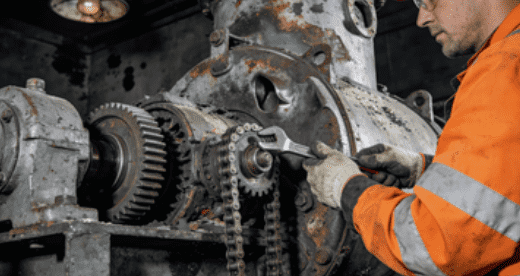
Old incinerators suffer from significant mechanical degradation. Corroded chimneys, worn rotary air systems, and failing ash removal mechanisms are common issues that compromise safety and efficiency. Hydraulic components and feeding systems can also malfunction, leading to frequent stoppages.
Operational Consequences
Frequent maintenance interrupts the waste disposal schedule, creating bottlenecks in municipal or industrial operations. Facilities may incur higher costs for spare parts and skilled technicians, while reliability becomes an ongoing challenge. Outdated systems often lack predictive maintenance capabilities, meaning that failures are typically detected only after they occur, increasing downtime and repair costs.
Modern Automation Solutions
New garbage incinerators integrate PLC-controlled feeding and hydraulic systems, reducing the need for manual intervention. Automated loading and unloading mechanisms enhance operational reliability, while real-time monitoring sensors detect potential equipment failures before they cause disruptions. These improvements not only increase uptime but also extend the lifespan of the equipment.
Environmental Non-Compliance: Risks of Legacy Incinerators
Outdated Emission Controls
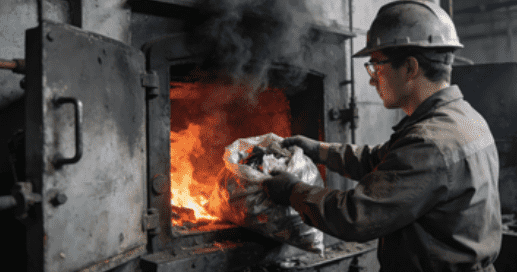
Many old garbage incinerators are unable to comply with current environmental standards. Without effective tail gas purification systems, emissions of HCl, SOx, VOCs, and odorous gases often exceed safe thresholds.
Health and Ecological Impacts
Excessive emissions from outdated units can lead to respiratory problems, soil contamination, and water pollution. Communities near such facilities are at higher risk of exposure to harmful pollutants, and regulatory violations can result in fines or operational shutdowns.
Advanced Purification in Modern Systems
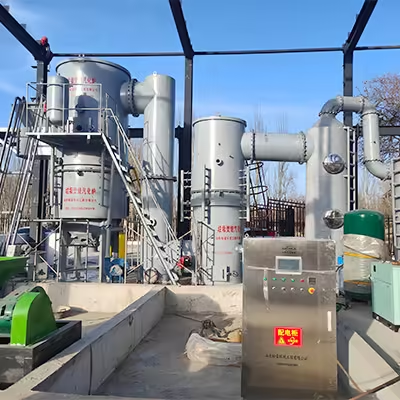
Modern incinerators use dry or wet tail-gas purification systems and calcium hydride filter bricks to neutralize acidic gases. Continuous emission monitoring ensures compliance with national and international standards. By effectively controlling emissions, modern systems protect both human health and the surrounding environment.
Comparison of Outdated vs Modern Garbage Incinerators
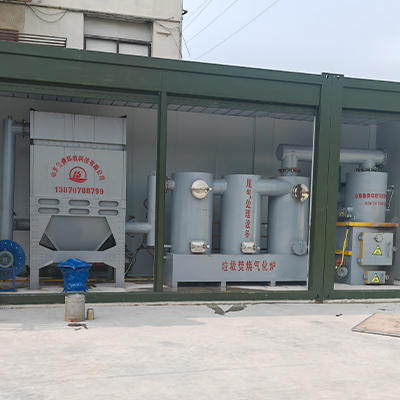
| Feature | Outdated Garbage Incinerator | Modern Garbage Incinerator |
|---|---|---|
| Combustion Temperature | 500–800°C | 850–1200°C |
| Ash Volume Reduction | 50–60% | Up to 90% |
| Tail Gas Treatment | Minimal | Advanced purification (HCl, SOx neutralization) |
| Energy Recovery | None | Possible steam/electricity recovery |
| Automation | Low | High, PLC-controlled |
| Maintenance | High frequency | Low, predictive maintenance |
| Regulatory Compliance | Often fails | Meets GB18484–2001 & international standards |
Operational Challenges: Detailed Insights
Manual Feeding and Monitoring
Older garbage incinerators require operators to manually feed waste, which often leads to uneven combustion. This can produce localized hotspots inside the combustion chamber, further decreasing efficiency.
Limited Waste Types
Legacy units are typically limited to standard household waste and cannot safely process industrial or hazardous materials. Attempting to incinerate inappropriate waste increases the risk of toxic emissions and system failure.
Inefficient Heat Recovery
Many outdated systems fail to utilize the heat generated during combustion. Modern incinerators recover thermal energy for co-generation or facility heating, improving energy efficiency and reducing operational costs.
Advantages of Upgrading to Modern Garbage Incinerators
Consistent Combustion
New incinerators maintain precise temperature control and optimized airflow, ensuring complete combustion of all waste materials. This minimizes ash residue and reduces environmental impact.
Automated and Reliable Operation
Automation reduces human error and the need for constant supervision. PLC-controlled feeding, hydraulic systems, and automated ash removal streamline operations and improve reliability.
Environmental Compliance
Modern incinerators feature advanced emission control systems that neutralize acid gases, capture particulates, and filter harmful VOCs. Compliance with GB18484–2001 and international standards ensures safe operation in any urban or industrial setting.
Energy Recovery and Cost Efficiency
Thermal energy from the incineration process can be harnessed to produce steam or electricity, creating additional cost savings. Reduced maintenance and higher efficiency further improve return on investment.
Case Study: Domestic vs Industrial Garbage Incinerator
Domestic Incinerator: Optimized for household waste, temperature 400–850°C, secondary combustion with acid neutralization, suitable for residential communities.
Industrial Incinerator: Handles complex industrial waste, temperature 800–1200°C, advanced purification, suitable for chemical plants, hospitals, and hazardous waste treatment.
Both demonstrate that modern technology drastically improves efficiency, safety, and compliance compared to outdated units.
FAQ
Q1: How can I identify an outdated garbage incinerator?
A1: Frequent downtime, high emissions, incomplete combustion, and failure to meet environmental standards are key indicators.
Q2: What waste types can modern incinerators handle?
A2: They can safely process household waste, industrial non-recyclables, and pre-sorted hazardous materials.
Q3: How often should maintenance be performed on modern systems?
A3: With predictive maintenance and sensors, inspections can be quarterly or semi-annual, minimizing downtime.
Q4: Can modern incinerators recover energy?
A4: Yes, they can convert thermal energy into electricity or steam, enhancing cost-effectiveness.
Q5: Are modern incinerators environmentally safe?
A5: Fully. They meet strict emission standards, neutralize acidic gases, and reduce toxic residues.
Conclusion
Outdated garbage incinerators are no longer viable in modern waste management. They are inefficient, require high maintenance, and fail to meet environmental standards. Investing in modern incineration technology ensures:
- Complete combustion
- Reduced emissions
- Energy recovery
- Automated and reliable operation
- Regulatory compliance
Facilities upgrading their incinerators benefit from enhanced safety, lower operational costs, and improved sustainability, making it a smart choice for any city or industrial operator.