
Table of Contents
Introduction
Incinerators for solid waste are essential for modern waste management, reducing landfill usage, controlling environmental impact, and generating energy. Understanding how do incinerators for solid waste work helps municipalities, industrial operators, and businesses choose efficient and safe waste treatment solutions. This guide covers principles, types, technical details, applications, and comparisons to give a comprehensive overview.
How Do Incinerators for Solid Waste Work?
Basic Principles of Waste Incineration
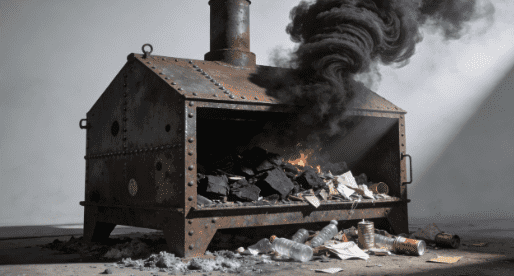
Solid waste incineration transforms combustible materials into ash, flue gases, and heat. Waste enters a high-temperature furnace where controlled combustion breaks down organic matter.
- Primary Combustion Zone: Waste undergoes initial burning; volatiles are released.
- Secondary Combustion Zone: Ensures complete oxidation of gases and remaining solids, reducing pollutants.
- Energy Recovery: Heat is captured and used for steam or electricity generation.
Thermal Conversion and Efficiency
High temperatures (850–1200°C) and sufficient oxygen supply ensure complete combustion. Efficient heat transfer and proper air distribution maximize energy recovery while minimizing unburned residues. Modern incinerators use automated monitoring to maintain optimal temperature and airflow.
Types of Solid Waste Incinerators
Mass Burn Incinerators
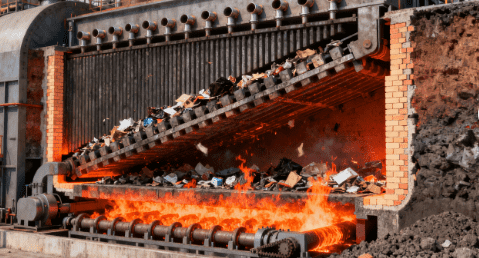
These are designed for municipal solid waste, burning large volumes on grates. Advantages include simple operation and consistent performance, but efficiency may vary with high-moisture or industrial waste.
Fluidized Bed Incinerators
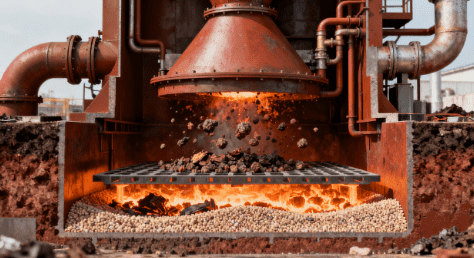
Fluidized bed technology uses a bed of inert particles, offering uniform combustion and higher efficiency. Ideal for industrial or wet waste due to improved heat transfer and faster reaction rates.
Modular and Mobile Incinerators
Portable and flexible, suitable for temporary sites or small-scale applications. Though their output is lower, they are valuable for disaster zones, remote communities, or pilot projects.
Table: Comparison of Incinerator Types
| Type | Waste Type | Capacity (tons/day) | Energy Recovery | Efficiency | Typical Applications |
|---|---|---|---|---|---|
| Mass Burn | Municipal Waste | 50–500 | Moderate | Medium | Urban solid waste management |
| Fluidized Bed | Industrial Waste | 10–100 | High | High | Industrial, wet, or hazardous waste |
| Modular/Mobile | Mixed/Temporary | 1–20 | Low | Medium | Disaster relief, small towns |
This table helps decision-makers quickly compare performance and suitability for their needs.
Components and Technical Insights
Understanding the components of an incinerator is crucial for evaluating performance, energy efficiency, and environmental compliance. Modern incinerators are complex systems integrating multiple subsystems to ensure effective waste processing.
Furnace and Combustion Chamber
The furnace is the core of any solid waste incinerator. It must maintain consistent high temperatures, typically between 850°C and 1200°C, to ensure complete oxidation of combustible materials. Proper airflow design is critical; insufficient oxygen can cause incomplete combustion and higher emissions of CO and volatile organic compounds.
- Refractory Linings: High-grade refractory bricks or ceramic linings protect the furnace walls from thermal stress, abrasion, and chemical attack, extending operational life.
- Optimized Combustion Chambers: Multi-zone chambers, including primary and secondary combustion zones, help maintain ideal residence time for gases and solids, improving burnout efficiency.
- Temperature Monitoring: Multiple thermocouples ensure even heat distribution and allow operators to adjust fuel or waste feed rates to maintain optimal combustion conditions.
Furnace design parameters often include:
| Parameter | Typical Range | Importance |
|---|---|---|
| Combustion Temperature | 850–1200°C | Ensures complete waste oxidation |
| Residence Time | 1–3 seconds | Reduces unburned particulates |
| Airflow Rate | 1.5–3 m³/s per ton of waste | Controls combustion efficiency and emissions |
Flue Gas Treatment
Flue gas treatment is essential for meeting environmental regulations and protecting public health. Modern incinerators integrate multiple treatment stages to remove particulates, acidic gases, and harmful compounds such as dioxins and furans.
- Cyclones: Remove large particulates from the flue gas using centrifugal force.
- Bag Filters: Capture fine particles and dust, ensuring emissions meet particulate matter limits.
- Wet and Dry Scrubbers: Neutralize acidic gases like SOx and HCl, reducing corrosion risks and environmental impact.
- Selective Catalytic Reduction (SCR): Reduces NOx emissions using catalysts, often required for industrial-scale or urban installations.
Performance parameters for flue gas treatment often include:
| Component | Removal Efficiency | Operational Parameter |
|---|---|---|
| Cyclone | 50–70% | Gas velocity 10–15 m/s |
| Bag Filter | 95–99% | Filter area, pressure drop < 2500 Pa |
| Wet Scrubber | 90–95% | Liquid-to-gas ratio 2–5 L/m³ |
| SCR | 70–90% NOx reduction | Operating temperature 250–400°C |
Effective flue gas treatment not only ensures compliance with environmental regulations but also reduces long-term maintenance costs by preventing corrosion in downstream equipment.
Heat Recovery Systems
Heat recovery is a critical component for transforming waste into energy, reducing operational costs, and improving overall system efficiency.
- Heat Exchangers: Capture thermal energy from hot flue gases to produce steam, which can drive turbines for electricity generation or provide district heating.
- Boilers: Convert recovered heat into pressurized steam, commonly used in combined heat and power (CHP) systems.
- Efficiency Optimization: Using economizers and condensers, incinerators can achieve thermal efficiencies of 20–30% in electricity generation and up to 80% in combined heat recovery applications.
Key operational parameters:
| Parameter | Typical Range | Impact |
|---|---|---|
| Steam Pressure | 10–40 bar | Determines electricity generation capacity |
| Steam Temperature | 200–450°C | Affects turbine efficiency |
| Flue Gas Exit Temp | 120–180°C | Balances heat recovery vs. corrosion risk |
Heat recovery also contributes to sustainability goals by reducing reliance on fossil fuels and lowering greenhouse gas emissions.
Automation and Control
Modern incinerators rely heavily on automation to ensure safe, efficient, and environmentally compliant operation.
- Sensors: Continuously monitor temperature, oxygen content, flue gas composition, and ash levels.
- Automated Feed Systems: Adjust waste input rates based on real-time combustion conditions.
- Airflow Control: Modulates primary and secondary air to maintain optimal combustion and minimize pollutants.
- Data Logging and Alarms: Real-time data collection allows operators to track performance, detect anomalies, and schedule preventive maintenance.
Automation allows incinerators to operate efficiently even with variable waste composition, maintaining energy recovery and emission compliance while reducing the need for manual intervention.
Key control parameters:
| Parameter | Typical Setting | Purpose |
|---|---|---|
| O₂ Content | 3–6% | Ensures complete combustion |
| CO Levels | < 50 ppm | Indicates combustion efficiency |
| Flue Gas Temp | 850–1200°C | Prevents incomplete burning |
| Ash Removal Interval | 6–24 hours | Maintains furnace efficiency |
Environmental and Safety Considerations
Emission Control and Monitoring
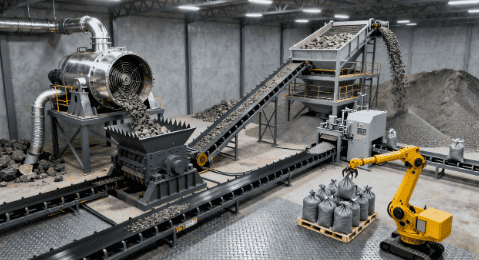
Strict monitoring of NOx, SOx, particulate matter, and dioxins is necessary. Advanced flue gas cleaning technologies reduce pollutants and maintain regulatory compliance.
Ash Management
Bottom ash can be recycled into construction materials, while fly ash is treated as hazardous waste. Proper handling prevents secondary contamination.
Safety Protocols
High-temperature operations require protective equipment, automated shutoffs, and regular inspections to prevent accidents and maintain operational safety.
Advantages and Limitations
Key Advantages
- Significant volume reduction (up to 90%)
- Energy generation from waste
- Minimizes landfill dependency
Limitations
- High upfront and operational costs
- Requires skilled operators and regular maintenance
- Stringent emission control is mandatory
Conceptual Comparison
Mass burn incinerators are cost-effective for municipal waste but less suited for industrial sludge. Fluidized bed incinerators offer higher efficiency but require greater investment. Modular units provide flexibility but lower capacity, suitable for temporary or small-scale applications.
Real-World Applications and Case Studies
Municipal Solid Waste Management
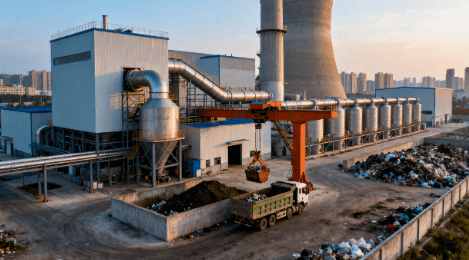
Cities use mass burn incinerators to handle daily household waste. For example, a European city installed a 200-ton/day incinerator producing 15 MW of electricity, reducing landfill needs by 75%.
Industrial and Hazardous Waste
Chemical plants and factories utilize fluidized bed incinerators for industrial sludge, achieving uniform combustion and high energy recovery.
Healthcare Waste
Medical waste incinerators safely destroy pathogens while ensuring emissions meet environmental standards.
Case Study: Industrial Plant
An automotive parts manufacturer implemented a fluidized bed incinerator for oily rags and industrial solvents. The system processed 30 tons/day, generated 2 MW of electricity, and reduced hazardous waste disposal costs by 40%.
FAQ
Q1: Can all types of solid waste be incinerated?
Not all waste is suitable. High-moisture or metal-heavy waste may require pre-treatment or specialized incinerators.
Q2: How hot do incinerators get?
Typically, temperatures range from 850°C to 1200°C for complete combustion.
Q3: How is energy recovered?
Heat from combustion is captured via boilers or heat exchangers to generate electricity or provide district heating.
Q4: Are incinerators safe for the environment?
Modern incinerators have advanced emission controls, but strict monitoring is essential to minimize NOx, SOx, and dioxins.
Q5: How often should maintenance be performed?
Maintenance depends on usage but generally includes monthly inspections of the furnace, flue gas system, and ash handling.
Q6: What are the cost implications?
Costs vary by type and scale. Mass burn incinerators have lower capital costs for municipal waste, while fluidized bed units have higher efficiency but higher investment.
Conclusion
Understanding how do incinerators for solid waste work is vital for effective waste management, energy recovery, and environmental protection. Selecting the right incinerator type and ensuring proper operation maximizes efficiency, safety, and sustainability.
Need expert advice on solid waste incinerator selection and installation? Contact our engineers for tailored solutions and professional guidance.