Table of Contents
Gravity-based separation systems are a core part of modern water and wastewater treatment. By allowing suspended solids to settle under controlled conditions, these systems help industries and municipalities achieve reliable clarification while reducing downstream treatment load.
As a professional manufacturer, we provide engineered separation solutions designed for long-term operation, stable performance, and compliance with environmental standards across industrial and municipal projects.
What Is Sedimentation Equipment?
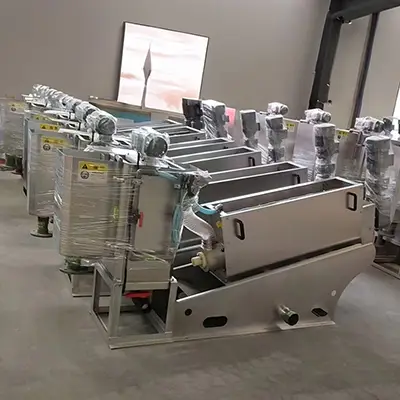
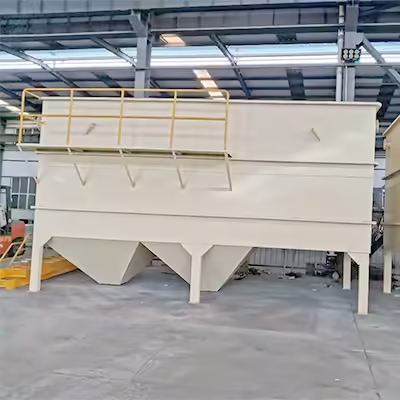
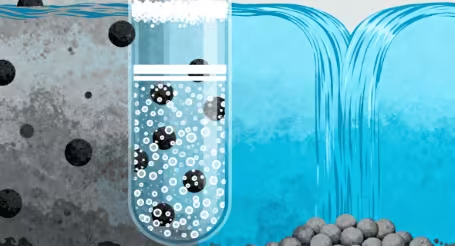
This type of treatment solution separates suspended particles from water by slowing down flow and using gravity to allow solids to settle. Heavier particles collect at the bottom of the tank, while clarified water flows out from the upper zone.
Such systems are widely used in treatment plants, industrial processes, and water reuse projects where simple, energy-efficient solid-liquid separation is required.
How Sedimentation Systems Work in Water and Wastewater Treatment
The separation process begins when influent water enters the unit through a specially designed inlet that ensures even flow distribution. As water moves through the settling zone, particles gradually sink and form sludge, which is collected and discharged through a dedicated removal mechanism.
A complete system typically includes:
- Flow distribution and inlet control
- Settling basin or tank
- Sludge collection and discharge components
- Effluent outlet structure
Proper hydraulic control is essential to maintain consistent clarification efficiency under varying operating conditions.
Types of Sedimentation Systems

Different configurations are available to meet specific project requirements related to capacity, footprint, and performance.
Common designs include:
- Lamella and inclined plate systems for high-rate treatment
- Circular tanks for large-scale municipal facilities
- Rectangular basins for industrial installations
- Compact units for space-limited sites
Each configuration is selected based on solids concentration, flow rate, and available installation space.
Key Design Parameters
Performance depends heavily on correct engineering and system sizing. Important factors include:
- Hydraulic retention time
- Surface loading rate
- Particle settling characteristics
- Sludge removal efficiency
- Structural materials and corrosion resistance
As a manufacturer with in-house engineering support, we design each solution according to real operating data rather than generic assumptions..
Applications of Sedimentation Equipment Applications Across Industries
Gravity separation systems are used in a wide range of industries due to their simplicity and reliability.
| Industry | Typical Use |
|---|---|
| Industrial Wastewater | Removal of suspended solids |
| Municipal Water | Raw water clarification |
| Mining and Minerals | Tailings and slurry separation |
| Chemical Processing | Process water treatment |
| Food & Beverage | Organic solids removal |
| Textile & Paper | High-turbidity effluent treatment |
Different applications require tailored designs to match water quality and regulatory demands.
Common Treatment Challenges Addressed
Well-designed settling systems help solve several operational issues, including:
- High solids concentration
- Poor settling behavior
- Excess sludge buildup
- Inconsistent effluent clarity
Advanced internal structures, such as inclined plates, improve separation efficiency while reducing required footprint.
How to Choose the Right Solution for Your Project
Selecting an appropriate system requires understanding both technical and practical project conditions, such as:
- Wastewater composition and solids size
- Required treatment capacity
- Available space and installation constraints
- Discharge standards
- Long-term operation and maintenance needs
Working directly with a manufacturer allows solutions to be tailored precisely to these conditions, reducing risk during operation.
Why Work with Us as Your Manufacturing Partner
We provide complete separation solutions, from process design to fabrication and delivery. Our strengths include:
- Customized engineering based on project-specific data
- Reliable manufacturing and quality control
- Compliance with common international standards
- Technical support throughout the project lifecycle
Our goal is to deliver systems that operate reliably, efficiently, and economically over the long term.
Sedimentation Equipment Installation, Operation, and Maintenance
Proper installation and operation are critical to system performance. Our designs emphasize ease of installation and straightforward operation, supported by clear technical documentation and commissioning guidance.
Routine inspection, sludge management, and preventive maintenance help extend service life and maintain consistent treatment efficiency.
Sedimentation Equipment Cost and Investment Considerations
Project cost depends on factors such as capacity, structural design, material selection, and customization level. While initial investment is important, operating efficiency, maintenance requirements, and service life should also be considered when evaluating overall value.
High-quality systems typically offer lower operating costs and more stable performance over the long term.
Sedimentation Equipment Standards and Compliance
Our solutions are designed in accordance with commonly applied industry standards and environmental regulations. This ensures safe operation, consistent treatment results, and compliance with local discharge requirements.
Conclusion
Sedimentation systems remain a core technology for effective solid-liquid separation in water and wastewater treatment. Selecting the right design has a direct impact on treatment efficiency, operational stability, and long-term costs.
As a professional manufacturer, we supply customized, high-efficiency solutions for industrial and municipal applications. Whether your project requires a compact high-rate system or a large-scale treatment unit, our team is ready to provide reliable engineering support and proven manufacturing quality.
Contact us today to discuss your project requirements and receive a tailored solution designed for long-term performance.
FAQ
What is sedimentation equipment used for?
Sedimentation equipment is used to separate suspended solids from water by gravity settling. It is commonly applied in wastewater treatment, water clarification, and industrial solid-liquid separation processes.
How does sedimentation equipment work?
It works by slowing down water flow so that heavier particles can settle at the bottom of the tank, while clarified water flows out from the top.
What industries commonly use sedimentation equipment?
It is widely used in industrial wastewater treatment, municipal water treatment, mining, chemical processing, food and beverage production, and paper and textile industries.
How do I choose the right sedimentation equipment for my project?
The right system depends on wastewater characteristics, treatment capacity, available space, and discharge requirements. Working with an experienced manufacturer helps ensure proper design and reliable performance.
Can sedimentation equipment be customized?
Yes. Most industrial systems can be customized based on flow rate, solids concentration, installation conditions, and specific project requirements.
Need Help Choosing the Right Sedimentation Equipment?
If you’re unsure which sedimentation system best fits your water or wastewater treatment project, our experts are here to help. Contact us today for a personalized consultation and receive a customized solution designed for reliable performance and long-term efficiency. Don’t compromise on treatment quality—get in touch now to support your project with proven engineering and manufacturing expertise!