
Key Takeaways
- Learn why mining operations must adopt belt filter press for sludge dewatering
- Understand the working principle of mine sludge belt filter press
- Compare belt filter press with other dewatering equipment
- Identify the best models and key selection criteria for mining
- See real industry data and performance benchmarks
- Learn expert opinions and practical maintenance tips
- Discover common mistakes to avoid when you buy belt filter press
- Get answers to common questions in the FAQ section
Table of Contents
Introduction
Mining sludge is not just a waste problem. It is a cost problem, a compliance problem, and a productivity problem. Every day, mining operations produce large volumes of slurry and sludge from ore washing, flotation, sedimentation, tailings management, and tunnel excavation. These sludge materials contain high water content and fine solids that are difficult to handle. If you do not control sludge properly, you will face high disposal costs, regulatory penalties, and even project delays.
If you are considering whether to buy belt filter press for your mining operation, this guide is written for you. A belt filter press is one of the most efficient, reliable, and scalable solutions for continuous sludge dewatering in mining. It can reduce sludge volume, recover water, lower transportation costs, and help meet environmental regulations.
This guide will not only explain how belt filter presses work but also show you how to select the best models for mining, what data to pay attention to, and what professionals recommend. If you want a practical and long lasting solution, you must read this guide.
What Is a Belt Filter Press and Why Mining Needs It
Definition of Belt Filter Press
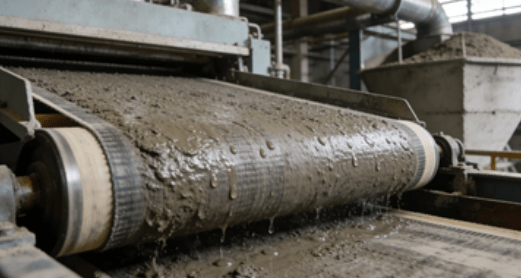
A belt filter press is a continuous dewatering machine that uses a combination of gravity filtration and pressure filtration to separate solids from liquids. The sludge is fed onto a moving filter belt, where free water is drained by gravity. Then the sludge is squeezed between two belts through a series of rollers, producing a compact filter cake.
Why Belt Filter Press Is Suitable for Mining
Mining sludge usually has high volume, variable composition, and high water content. The belt filter press is especially suitable for mining because:
- It is continuous and can operate 24 hours a day
- It handles large volumes of sludge
- It provides stable cake formation
- It is easy to automate and integrate into mining plants
- It reduces sludge disposal costs and improves water recovery
Common Mining Sludge Types
Mining sludge can come from different processes, such as:
- Ore washing sludge
- Flotation tailings
- Sedimentation sludge
- Coal tailings
- Tunnel excavation drilling sludge
- Mineral processing sludge
Each sludge type has different characteristics. The right belt filter press must match the sludge properties to achieve the best results.
How Mine Sludge Belt Filter Press Works
Step 1 Gravity Filtration
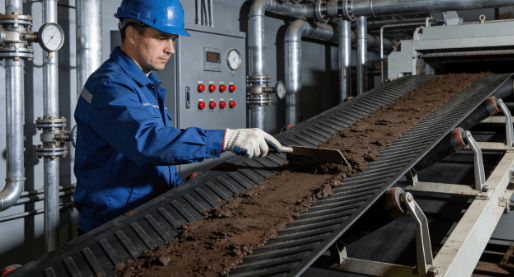
In the first stage, sludge is evenly distributed on the filter belt by a feeding system. The belt moves forward and free water drains under gravity. This stage removes a large portion of free water and reduces the load on the pressure stage.
Step 2 Progressive Pressure Filtration
The sludge then enters the pressure zone, where two belts sandwich the sludge. A series of rollers applies gradually increasing pressure. The pressure forces water out through the belt mesh, producing a dewatered cake.
Step 3 Cake Formation and Discharge
After pressure filtration, the sludge forms a compact cake. The cake is discharged from the belt and collected for disposal or reuse.
Step 4 Water Recovery
The filtered water can be collected and reused in the process, which is a major benefit for mining operations that require large amounts of water.
Key Functions of a Mine Sludge Belt Filter Press
Gravity Filtration
Gravity filtration is the first and essential stage. It removes free water and reduces sludge volume before pressure filtration. This stage improves the efficiency of the whole system.
Progressive Pressure Dewatering
The pressure stage uses a gradually increasing pressure gradient. This ensures stable dewatering without cake rupture. The pressure gradient design is crucial for obtaining low moisture cakes.
Continuous Operation
The continuous operation is the biggest advantage of belt filter press. It can operate continuously, reducing labor cost and improving productivity.
Sludge Cake Formation
The final cake is stable and easy to handle. It reduces transportation costs and improves disposal efficiency.
Key Benefits of Buying Belt Filter Press for Mining
Reduced Sludge Volume
Belt filter press can reduce sludge volume significantly. This lowers transportation and disposal costs.
Water Recovery
The filtered water can be reused in the mining process. This helps reduce water consumption and supports sustainable mining.
Environmental Compliance
Mining wastewater discharge is strictly regulated. Belt filter press helps mines meet discharge standards by reducing liquid waste and stabilizing sludge.
Improved Plant Efficiency
Continuous operation means higher uptime and stable performance. This reduces downtime and increases productivity.
Lower Labor Costs
Automated belt filter presses reduce the need for manual operation. This lowers labor costs and improves safety.
Comparison with Other Dewatering Equipment
Belt Filter Press vs Plate and Frame Filter Press
Belt filter press is continuous, while plate and frame filter press is batch. For large scale mining, belt filter press is more suitable because it can operate continuously and handle large volume. Plate and frame filter press provides higher filtration accuracy for certain sludges, but it requires more labor and has longer downtime.
Belt Filter Press vs Centrifuge
Centrifuge has high speed and high separation efficiency, but it has higher energy consumption and maintenance cost. Belt filter press is more energy efficient and easier to maintain. For large volume mining sludge, belt filter press is often more cost effective.
Belt Filter Press vs Screw Press
Screw press is suitable for low to medium solids sludge. Belt filter press is better for high volume and high water content sludge. Belt filter press also provides more stable cake formation.
How to Choose the Best Belt Filter Press Model for Mining
Key Selection Criteria
When you plan to buy belt filter press, you must evaluate these factors:
- Sludge type and properties
- Required capacity
- Desired cake moisture content
- Belt width and length
- Roller pressure system
- Automation and control system
- Maintenance requirements
- Equipment footprint and installation conditions
- Budget and total cost of ownership
Sludge Properties to Check
You need to know:
- Solid content
- Particle size distribution
- Chemical composition
- Viscosity
- pH value
- Presence of chemicals or reagents
These properties affect belt selection, roller pressure design, and filtration performance.
Real Industry Data and Performance Benchmarks
Typical Dewatering Performance
For mining sludge, belt filter press typically achieves:
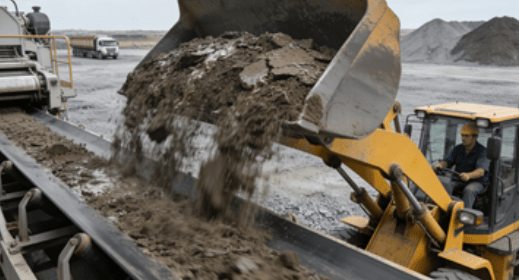
- Gravity filtration removes 30 to 50 percent of free water
- Pressure filtration reduces moisture to 15 to 25 percent
- Overall water reduction can reach 60 to 75 percent
Efficiency and Cost Benefits
According to industry data, using belt filter press can:
- Reduce sludge handling costs by 20 to 40 percent
- Increase water recovery by 10 to 30 percent
- Reduce landfill volume significantly
- Improve plant operational stability
These data reflect real results in mining plants where belt filter press is used for sludge management.
Comparison Table Best Models for Mining
| Model Type | Best For | Capacity | Cake Moisture | Special Feature | Cost Level |
|---|---|---|---|---|---|
| Gravity and Pressure Belt Press | General mining sludge | 5 to 20 m3 per hour | 18 to 25 percent | Dual stage dewatering | Medium |
| High Pressure Belt Press | Heavy sludge | 10 to 40 m3 per hour | 12 to 18 percent | Extra rollers | High |
| Low Maintenance Belt Press | Remote sites | 5 to 15 m3 per hour | 20 to 30 percent | Simple structure | Medium |
| Automated Belt Press | Large scale plants | 20 to 50 m3 per hour | 15 to 22 percent | PLC control | High |
Detailed Features to Check When You Buy Belt Filter Press
Filter Belt Material and Durability
The belt is the core component. For mining sludge, the belt must withstand abrasion, chemical corrosion, and high pressure. High quality belts have long service life and stable tensile strength.
Roller Design and Pressure Gradient
The roller arrangement determines dewatering efficiency. A gradual pressure gradient avoids cake rupture and improves moisture reduction.
Feeding System
Uniform feeding is essential. Uneven feeding causes belt deviation and reduces efficiency. A good feeding system ensures stable operation and consistent cake quality.
Automation and Control
Modern belt filter presses use PLC control systems. These systems monitor belt speed, pressure, and alarms. Automation improves safety and reduces labor.
Maintenance and Spare Parts
Mining sites often operate in harsh environments. You should choose equipment that is easy to maintain and has available spare parts. Regular maintenance prevents downtime and extends equipment life.
Common Mistakes to Avoid When Buying Belt Filter Press
Mistake 1 Choosing Based on Price Alone
Low cost equipment may fail quickly. Cheap belts, poor rollers, and weak frames cause frequent breakdowns. The total cost of ownership may be higher than expected.
Mistake 2 Ignoring Sludge Characteristics
Different sludge types require different belts and pressure systems. If you ignore sludge properties, you may get poor performance and unstable cake quality.
Mistake 3 Underestimating Maintenance
Mining environments are harsh. If you do not plan maintenance, the belt press will stop unexpectedly. Maintenance includes belt inspection, roller alignment, cleaning, and lubrication.
Mistake 4 Ignoring Water Recovery Requirements
If you do not plan water recovery, you may miss one of the biggest benefits of belt filter press. Reusing filtered water reduces water consumption and cost.
Maintenance Tips for Belt Filter Press in Mining
Regular Belt Inspection
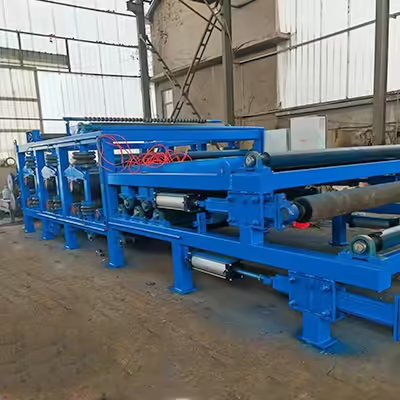
Check belt wear, tears, and tension. Replace belts when necessary. A worn belt reduces filtration efficiency and increases downtime.
Clean the Machine Regularly
Remove sludge residues to avoid clogging and corrosion. Regular cleaning improves performance and extends equipment life.
Check Roller and Pressure System
Ensure rollers are aligned and pressure is stable. Misalignment causes poor cake quality and belt deviation.
Monitor Control System
Monitor alarms and control data. Early detection of issues can prevent major breakdowns.
Keep Spare Parts Ready
Keep spare belts, rollers, and drive parts. Mining operations require high uptime. Spare parts reduce downtime and maintain stable production.
Practical Applications of Belt Filter Press in Mining
Metal and Mineral Processing Plants
Used for ore washing sludge, flotation sludge, and sedimentation sludge. Belt filter press reduces wastewater load and recovers water.
Coal Preparation Plants
Removes water from coal tailings sludge. It reduces disposal volume and transportation cost.
Tailing Ponds and Dams
Processes accumulated sludge to prevent overflow and environmental contamination. It improves safety and stability.
Tunnel Excavation and Underground Mining
Dewaters drilling sludge and improves site cleanliness. It reduces hauling and disposal cost.
Rare Earth and Non Ferrous Mining
Supports strict environmental requirements by reducing liquid waste discharge. Belt filter press improves waste management and compliance.
Expert Opinions and Industry Insights
Mining Engineers
Mining engineers emphasize that continuous dewatering systems improve efficiency and stability. A belt filter press can handle large volume sludge with less labor and lower cost.
Environmental Specialists
Environmental experts highlight that belt filter press helps mining operations meet discharge standards and reduce environmental risk. It is a key tool for sustainable mining.
Plant Managers
Plant managers value automation and stable cake formation. Belt filter press reduces labor intensity and improves uptime. It is a practical solution for large scale mining plants.
Advanced Topics and Professional Considerations
Chemical Conditioning and Flocculants
In many mining applications, sludge must be conditioned with flocculants before dewatering. Flocculants help particles aggregate, improving filtration and cake quality. The choice of flocculant depends on sludge type, pH, and particle properties.
Energy Consumption and Operational Cost
Belt filter presses are energy efficient compared to centrifuges. The main energy consumption comes from belt drive and roller pressure system. Proper design and operation can reduce energy cost.
Automation and Remote Monitoring
Modern belt filter presses can be integrated with remote monitoring systems. This allows real time data collection, remote control, and predictive maintenance. It improves operational efficiency and reduces manual work.
Safety and Workplace Standards
Mining operations require strict safety management. Belt filter presses must be equipped with safety guards, emergency stop systems, and proper training for operators. Safety management reduces accidents and improves compliance.
Comparison of Belt Filter Press with Alternative Solutions
Belt Filter Press vs Vacuum Belt Filter
Vacuum belt filters use vacuum to improve filtration. They are suitable for certain sludge types, but they require more complex equipment and higher energy consumption. Belt filter press is simpler and more suitable for large volume mining sludge.
Belt Filter Press vs Drum Filter
Drum filters are suitable for low to medium solids. Belt filter press can handle higher solids and provide better cake quality. For mining sludge, belt filter press is usually more effective.
Belt Filter Press vs Filter Bags
Filter bags are low cost but require frequent replacement and high labor. Belt filter press is more durable and suitable for continuous operation.
Additional Practical Guidance When You Buy Belt Filter Press
How to Evaluate Supplier Reliability
When choosing a supplier, consider:
- Manufacturing experience in mining equipment
- Availability of technical support
- Spare parts supply
- After sales service
- Project references and case studies
A reliable supplier can help you design the system and ensure stable operation.
How to Conduct a Pilot Test
A pilot test is important. It helps verify:
- Filtration performance
- Cake moisture
- Belt selection
- Flocculant dosage
- Operating parameters
Pilot testing reduces risk and ensures you choose the right model.
How to Plan Installation and Operation
Plan the layout based on:
- Sludge source and feed location
- Water collection and reuse system
- Cake discharge and transportation
- Power supply and control room
- Maintenance access
A well planned installation ensures stable operation and easier maintenance.
Conclusion
If you are planning to buy belt filter press for mining, you need a solution that is reliable, efficient, and sustainable. A belt filter press provides continuous dewatering, stable cake formation, and water recovery. It reduces disposal costs and supports environmental compliance.
The best model depends on your sludge type, capacity requirements, and operational conditions. This guide provides the key criteria, performance data, and practical insights to help you make the right choice.
If you want, I can also provide:
- A detailed model recommendation based on your sludge data
- A cost benefit analysis
- A complete procurement and installation plan
Just share your sludge characteristics, capacity needs, and site conditions, and I will tailor a professional solution for your mining operation.
FAQ
What is a belt filter press used for in mining?
A belt filter press is used for continuous dewatering of mining sludge. It reduces sludge volume, recovers water, and improves waste management.
How do I choose the right belt filter press for mining sludge?
You should check sludge properties, required capacity, desired cake moisture, belt width, and automation features. Pilot testing is recommended.
Can a belt filter press reduce moisture to 15 percent?
Yes, in many cases belt filter presses can achieve cake moisture of 15 to 25 percent depending on sludge type and operating conditions.
Is belt filter press more cost effective than centrifuge?
For large volume mining sludge, belt filter press is usually more cost effective due to lower energy consumption and easier maintenance.
How long does a belt filter press last?
With proper maintenance, a belt filter press can operate for many years. Belt life depends on sludge type and operating conditions.