
Table of Contents
Key Points
- The importance of wastewater management in the food industry
- Four primary challenges and their operational impact
- Comparative analysis of treatment methods
- Real-world case studies and industry insights
- Cost, efficiency, and environmental considerations
- Emerging technologies in wastewater treatment
- Regulatory compliance and sustainability strategies
- FAQs addressing practical questions
Introduction
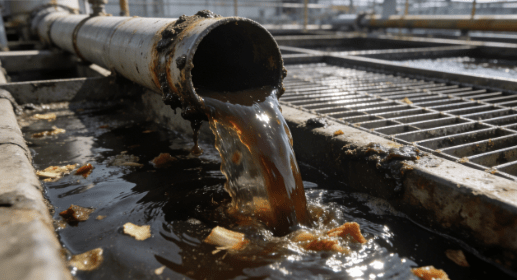
Food processing facilities generate wastewater containing high levels of organic matter, fats, oils, grease (FOG), nutrients, and sometimes chemical additives. This complex wastewater requires advanced treatment strategies to avoid regulatory penalties, environmental damage, and operational inefficiencies.
Recent studies indicate that inefficient wastewater management costs the food industry billions annually due to energy waste, fines, and equipment maintenance. According to Dr. Laura Simmons, Environmental Engineer at the International Water Association, “Food industry wastewater treatment is not just about compliance; it’s a strategic investment that improves sustainability, reduces costs, and enhances operational reliability.”
This blog explores 4 common challenges, practical solutions, and expert strategies to help plants optimize wastewater treatment for food industry operations.
Challenge 1: High Organic Load in Wastewater
Concept: Excess organic matter strains treatment systems in wastewater treatment for food industry operations.
- Food processing plants often discharge wastewater with high BOD (Biochemical Oxygen Demand) and COD (Chemical Oxygen Demand) levels, sometimes exceeding 2,000–3,500 mg/L, depending on the product type.
- High organic loads can overwhelm conventional biological treatment processes, resulting in poor microbial activity, sludge bulking, strong odor generation, and reduced treatment efficiency.
- Inadequately managed organic load may also increase energy consumption as aeration systems work harder to maintain dissolved oxygen.
Solutions in wastewater treatment for food industry:
- Pre-treatment technologies: Screening, grit removal, and grease traps reduce large particles and protect downstream treatment units.
- High-rate anaerobic digestion: Converts organic matter into biogas, generating renewable energy and reducing sludge volume.
- Membrane bioreactors (MBR): Offer high BOD/COD removal efficiency and stable performance for plants with variable organic loads.
- Automated monitoring systems: Sensors tracking BOD, COD, pH, and temperature allow real-time adjustments to aeration and chemical dosing, preventing system overload.
Applications in the food industry:
- Dairy and cheese production (high lactose content leading to elevated BOD)
- Meat processing (high protein and fat content)
- Bakeries (high sugar content)
- Beverage production facilities (high carbohydrate content)
Expert Insight: Dr. Emily Chen, Environmental Engineer, notes:
“Effective wastewater treatment for food industry requires precise monitoring and adaptive controls. Automated systems can adjust aeration and dosing in real time to stabilize microbial populations and maintain high treatment efficiency.”
Additional Tip: Maintaining a consistent organic load in treatment tanks, combined with regular sludge removal, can improve overall system longevity and reduce maintenance costs.
Challenge 2: Fat, Oil, and Grease (FOG) Accumulation
Concept: Fats, oils, and grease create operational bottlenecks in wastewater treatment for food industry facilities.
- FOG tends to float and accumulate on water surfaces, decreasing oxygen transfer efficiency and causing microbial activity to decline.
- Untreated FOG can clog pumps, pipes, and aeration diffusers, leading to 15–25% higher annual maintenance costs.
- Over time, FOG accumulation may also produce hydrogen sulfide and other malodorous gases, affecting workplace safety and community relations.
Management Strategies:
- Automatic grease interceptors: Reduce labor costs and ensure consistent flow in wastewater treatment for food industry plants.
- Enzymatic treatments: Break down fats, oils, and grease into simpler compounds, improving microbial degradation.
- Scheduled cleaning: Regular maintenance of tanks and pipelines prevents FOG buildup and maintains process efficiency.
Comparison of FOG Management Techniques:
| Method | Efficiency | Cost | Maintenance |
|---|---|---|---|
| Gravity Grease Traps | Moderate | Low | High |
| Automatic Grease Interceptors | High | Medium | Medium |
| Enzymatic Additives | High | Medium | Low |
Applications in wastewater treatment for food industry:
- Food service kitchens and catering operations
- Meat rendering plants and slaughterhouses
- Large-scale commercial bakeries and dairy facilities
Additional Insight: A combination of mechanical and enzymatic FOG management often yields the best results in high-volume food processing plants. Regular monitoring ensures consistent treatment efficiency and compliance.
Challenge 3: Variability of Wastewater Composition
Concept: Fluctuating wastewater characteristics can significantly reduce efficiency in wastewater treatment for food industry operations.
- Composition can vary due to product formulation changes, seasonal production, or cleaning cycles, leading to inconsistent BOD, COD, nutrient levels, and pH.
- Variability challenges biological treatment processes, as microbial populations are sensitive to sudden changes in load or chemical composition.
- Without proper monitoring, variability can cause system shocks, sludge bulking, or even process failure.
Solutions:
- Buffer tanks and equalization basins: Stabilize flow and load, ensuring more consistent biological treatment.
- Real-time sensors: Track BOD, COD, pH, and nutrient levels to provide instant feedback for automated controls.
- Adaptive process control and chemical dosing: Maintain stable treatment performance despite changing wastewater characteristics.
Applications:
- Beverage and juice production plants with seasonal ingredient variations
- Canned food processing facilities handling multiple product lines
- Snack and confectionery factories with variable sugar or fat content
Data Insight: Research in the Journal of Environmental Management shows that buffer tanks can improve BOD removal efficiency by 15–20% in facilities with high variability.
Additional Tip: Combining buffer tanks with online monitoring systems allows operators to anticipate and correct issues before they disrupt treatment.
Challenge 4: Compliance with Environmental Regulations
Concept: Meeting stringent discharge limits is essential and complex for wastewater treatment for food industry plants.
- Regulations often include strict limits on BOD (<30 mg/L), COD (<125 mg/L), total suspended solids (TSS), nutrients (nitrogen and phosphorus), and pH.
- Non-compliance may result in fines exceeding $50,000 per incident, plant shutdowns, and reputational damage.
- Compliance complexity increases when facilities have multiple discharge points or variable production schedules.
Solutions:
- Advanced treatment systems: Membrane Bioreactors (MBR), UV disinfection, and chemical dosing provide consistent effluent quality.
- Continuous compliance monitoring: Sensors and SCADA systems track effluent parameters in real time.
- Staff training: Ensures operators understand local regulations and proper treatment protocols.
Expert Opinion: Dr. Robert Kim, Regulatory Consultant, emphasizes:
“Proactive compliance strategies are key. Facilities that integrate advanced treatment, continuous monitoring, and operator training not only meet regulatory standards but also reduce risks and support sustainability goals.”
Additional Considerations:
- Plants can adopt wastewater reuse programs for cleaning, cooling, or irrigation, reducing water consumption while staying compliant.
- Predictive modeling can help anticipate seasonal or production-based changes to remain within discharge limits consistently.
Emerging Technologies in Wastewater Treatment
Concept: Innovative methods enhance efficiency and reduce costs.
- Membrane Bioreactors (MBR): High-quality effluent suitable for reuse
- Advanced Oxidation Processes (AOP): Break down complex organics
- Anaerobic Membrane Digesters: Convert organic load to biogas for energy recovery
Applications:
- Large-scale beverage plants
- High-volume meat processing
- Energy-conscious food facilities
Data Insight: MBR systems can achieve >95% BOD removal with effluent reusable for non-potable applications, reducing water intake costs by 20–30%.
Comparison Table: Treatment Methods
| Treatment Method | Advantages | Limitations | Best For |
|---|---|---|---|
| Activated Sludge | Efficient BOD/COD removal | Sensitive to load variations | Medium-sized plants |
| Membrane Bioreactor (MBR) | High-quality effluent, reuse possible | High CAPEX and maintenance | Large plants |
| Anaerobic Digestion | Energy recovery, reduces sludge volume | Temperature sensitive, slower | High-organic-load plants |
| Chemical Coagulation & Flocculation | Removes TSS and suspended solids | Generates chemical sludge | Small to medium plants |
Cost Considerations and ROI
Capital Expenditure (CAPEX):
- Medium-sized food processing plants implementing Membrane Bioreactor (MBR) systems can expect an initial investment of $500,000–$700,000, depending on wastewater volume and plant complexity.
- Smaller plants may opt for simpler activated sludge systems or hybrid biological treatments, which can reduce upfront costs by 20–40%, though efficiency may be lower.
Operational Expenditure (OPEX):
- Enzymatic FOG treatments cost approximately $0.10–$0.20 per cubic meter of wastewater treated.
- Regular maintenance, chemical dosing, and energy for aeration and pumps contribute additional operational costs.
- Advanced monitoring and automation in wastewater treatment for food industry plants may increase OPEX initially but reduce overall labor and energy costs long-term.
Return on Investment (ROI):
- ROI is often realized within 2–5 years, driven by energy recovery (from biogas via anaerobic digestion), reduced fines from regulatory compliance, and water reuse programs.
- Case studies indicate water reuse alone can save $30,000–$80,000 per year, depending on plant size and water costs.
Case Study:
A mid-sized dairy processing plant integrated an MBR system with anaerobic pre-treatment:
- Achieved 95% reduction in BOD, ensuring consistent effluent quality
- Saved $60,000 per year on water usage by recycling treated water for cleaning and cooling processes
- Maintained full regulatory compliance without any penalties over a 3-year monitoring period
Additional Insights:
- In wastewater treatment for food industry, ROI calculations should consider both tangible benefits (reduced fines, water savings, energy production) and intangible benefits (improved public perception, operational reliability, sustainability reputation).
Environmental and Sustainability Impact
Concept: Efficient wastewater treatment for food industry plants reduces environmental footprint and promotes sustainable operations.
- High material recovery and water reuse can cut freshwater intake by 20–30%, conserving local water resources.
- Anaerobic digestion of high-organic-load wastewater produces biogas, which offsets fossil fuel consumption, reduces carbon emissions, and can power plant operations.
- Proper treatment prevents eutrophication of rivers and lakes, protecting aquatic ecosystems from nutrient overloads.
Industry Insight:
According to the Food and Beverage Environmental Report 2025, implementing sustainable wastewater strategies can lower operational carbon footprint by 15–25%, depending on plant size and treatment complexity.
Additional Notes:
- Wastewater treatment for food industry plants now often incorporates energy-efficient aeration, UV disinfection, and chemical minimization to further reduce environmental impact.
- Circular water management and biogas recovery are increasingly recognized as key performance indicators (KPIs) for sustainability audits in food manufacturing.
Maintenance Best Practices
Concept: Regular maintenance is critical to maintain performance and prevent system failures.
Key Practices:
- Continuous Monitoring: Track BOD, COD, pH, and TSS to identify fluctuations early and adjust treatment protocols accordingly.
- FOG Interceptor Maintenance: Ensure automatic and manual grease traps are cleaned and operational. Accumulated FOG can reduce efficiency by 15–20% if neglected.
- Sludge Management: Schedule sludge removal based on system load, typically every 1–3 weeks depending on volume and organic content.
- Operator Training: Staff should be trained in adaptive treatment strategies, emergency procedures, and environmental compliance requirements.
- Predictive Maintenance: Use data analytics to anticipate equipment failures in pumps, blowers, or sensors to minimize downtime.
Additional Insight:
For high-volume plants, integrating IoT-based monitoring systems allows remote tracking of wastewater parameters, reducing labor costs while enhancing reliability. In wastewater treatment for food industry, predictive maintenance can improve BOD and COD removal efficiency by 10–15% annually.
Case Studies
Bakery Plant
- Issue: Wastewater with high sugar and fat content caused excessive BOD load and microbial stress.
- Solution: Enzymatic FOG treatment combined with anaerobic pre-treatment and equalization tanks.
- Result: 25% reduction in operational downtime, stable BOD and COD levels, consistent effluent quality.
- Additional Insight: The bakery was able to reuse 15% of treated water for cleaning, reducing water bills by $10,000 annually.
Dairy Processing Plant
- Issue: Variable whey composition and seasonal changes caused fluctuation in wastewater characteristics.
- Solution: Equalization tank plus adaptive aeration controls and real-time monitoring of organic load.
- Result: BOD removal remained stable above 90%, regulatory compliance achieved consistently, and sludge production decreased by 12%.
- Sustainability Benefit: Anaerobic digestion produced biogas sufficient to cover 10–15% of plant energy demand.
Beverage Plant
- Issue: High seasonal variation in sugar content led to inconsistent BOD/COD levels.
- Solution: Membrane Bioreactor (MBR) combined with UV disinfection and chemical dosing optimization.
- Result: >95% BOD removal, effluent safely reused for cooling water and floor cleaning, improving plant water efficiency.
- Economic Impact: Savings of $40,000 per year on water and chemical usage.
Snack Food Production Facility
- Issue: Intermittent production shifts led to variable nutrient loads, challenging biological treatment.
- Solution: Implementation of automated sensors with predictive modeling to adjust aeration and chemical dosing in real time.
- Result: Reduced compliance violations to zero, minimized odor complaints, and maintained operational consistency.
- Additional Benefit: 10–15% reduction in energy usage due to optimized aeration cycles.
FAQ
What is the most challenging aspect of food industry wastewater?
High organic load and FOG accumulation are the primary operational challenges.
How often should wastewater be monitored?
Daily or real-time monitoring is recommended for plants with variable production.
Which treatment is best for high-organic-load wastewater?
Anaerobic digestion combined with MBR is ideal for high BOD/COD levels.
Can treated wastewater be reused?
Yes, treated water can be reused for non-potable purposes like cleaning or cooling.
Are chemical treatments environmentally safe?
Proper dosing minimizes residual chemicals; enzymatic or biological treatments are preferable.
Conclusion
Wastewater treatment for the food industry is complex but essential for sustainability, regulatory compliance, and operational efficiency. By understanding the 4 common challenges—high organic load, FOG accumulation, variability in composition, and regulatory compliance—plants can adopt optimized treatment strategies.
Integrating advanced technologies, real-time monitoring, and adaptive control systems ensures efficient, cost-effective, and environmentally responsible operations, supporting long-term growth in the food sector.