
Table of Contents
Introduction
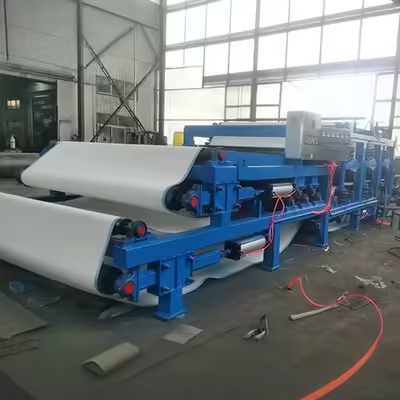
Belt press vs filter press are two widely used solid-liquid separation technologies in industries such as wastewater treatment, food processing, and chemical manufacturing. Each has unique advantages and limitations that make it suitable for specific applications. Understanding common problems in belt press vs filter press systems helps operators make informed decisions and maintain efficient operations.
Why Belt Press vs Filter Press Comparison Matters
Selecting between a belt press and a filter press impacts efficiency, maintenance, operating costs, and overall performance. Knowing the common issues helps avoid downtime and costly repairs.
Basic Operating Principles
Belt presses use a continuous belt to squeeze liquid from sludge, while filter presses use a series of plates to press out liquid in batch cycles. Each approach affects maintenance requirements and operational challenges.
1. Sludge Handling Problems in Belt Press vs Filter Press
Inconsistent Sludge Feed
Both systems require a consistent sludge feed. In belt presses, uneven feed can cause belt misalignment, while in filter presses, it may lead to uneven cake formation.
High Solids Content Challenges
Belt presses struggle with very high solids content, causing belt wear and frequent cleaning. Filter presses handle higher solids better but can be slower in operation.
2. Maintenance Issues in Belt Press vs Filter Press
Wear and Tear on Moving Parts
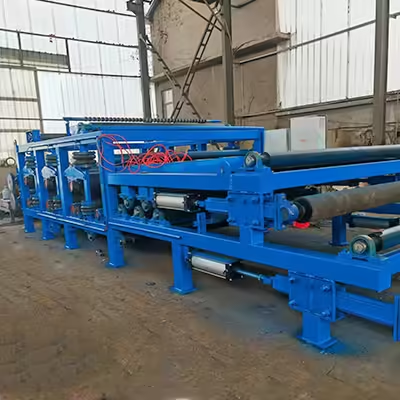
Belt presses have continuous moving belts, rollers, and pumps, which are prone to wear. Regular inspection is essential. Filter presses have fewer moving parts but need careful monitoring of plates and gaskets.
Cleaning and Downtime
Cleaning a belt press requires belt washing systems, which can interrupt production. Filter presses require manual or automated plate washing after each cycle, impacting throughput.
3. Filtration Efficiency Problems in Belt Press vs Filter Press
Cake Moisture Variation
Belt presses often produce cakes with variable moisture content, especially with sticky or fibrous sludge. Filter presses usually achieve lower moisture content but require more energy per cycle.
Permeate Clarity Issues
Uneven filtration can cause cloudy filtrate. Proper selection of filter cloth and regular maintenance are crucial in both belt press vs filter press systems.
4. Operational Costs in Belt Press vs Filter Press
Energy Consumption Differences
Belt presses typically use less energy for continuous operation, while filter presses consume more energy during high-pressure cycles.
Labor and Automation Requirements
Belt presses can be highly automated, reducing labor. Filter presses may require more manual intervention, especially during cake removal and plate cleaning.
5. Space and Installation Problems in Belt Press vs Filter Press
Footprint Requirements
Belt presses require a larger footprint for continuous belts and conveyors. Filter presses are more compact but need space for plate stacking and maintenance access.
Installation Complexity
Installing a belt press involves aligning belts, rollers, and pumps. Filter press installation focuses on structural support and hydraulic systems.
6. Troubleshooting Belt Press vs Filter Press
Common Operational Failures
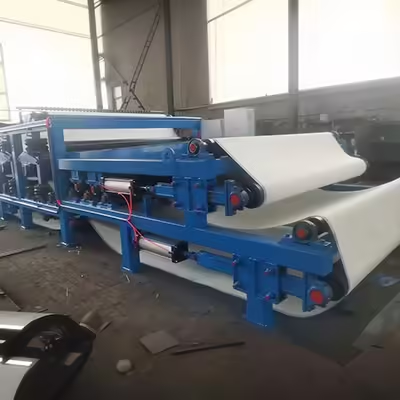
- Belt misalignment or tear in belt presses
- Plate leakage or gasket failure in filter presses
- Uneven sludge distribution in both systems
Preventive Measures
- Regular inspection and maintenance schedules
- Proper operator training
- Monitoring feed consistency and sludge characteristics
Comparison Table of Belt Press vs Filter Press Problems
| Problem Area | Belt Press | Filter Press | Suggested Solutions |
|---|---|---|---|
| Sludge Handling | Inconsistent feed, belt wear | Uneven cake formation | Adjust feed rate, monitor solids content |
| Maintenance | Belt and roller wear | Plate and gasket wear | Scheduled maintenance, spare parts inventory |
| Filtration Efficiency | Variable cake moisture | High energy per cycle | Optimize cloth selection, monitor filtration cycles |
| Operational Costs | Moderate energy, automated | High energy, more labor | Evaluate cost-benefit, implement automation where possible |
| Space Requirements | Large footprint | Compact but needs access | Plan layout carefully, consider modular designs |
| Troubleshooting | Belt tears, misalignment | Plate leaks, gasket failure | Preventive maintenance, staff training |
How to Prevent Common Problems in Belt Press vs Filter Press
Regular Monitoring
Continuous monitoring of feed rates, belt tension, and sludge characteristics reduces operational issues.
Proper Maintenance Protocols
Implementing a preventive maintenance schedule ensures belts, rollers, plates, and gaskets remain in good condition.
Staff Training and Operational Awareness
Educated operators can identify early signs of problems and take corrective action before failures occur.
Choosing the Right System for Your Application
Evaluate feed solids content, space availability, throughput requirements, and budget to decide between belt press vs filter press.
Conclusion
Understanding the common problems in belt press vs filter press systems is essential for operational efficiency and longevity. By monitoring feed consistency, performing regular maintenance, and training staff, industries can reduce downtime and maximize throughput. Selecting the appropriate system based on sludge characteristics, space, and budget ensures better performance and fewer operational challenges.
FAQ
Which system is better for high-solids sludge?
Filter presses generally handle high-solids sludge better, providing drier cakes but slower processing.
Can belt presses be fully automated?
Yes, belt presses can be highly automated with continuous operation, reducing labor costs.
How often should maintenance be performed?
Routine inspections should be weekly or monthly depending on usage, with major servicing annually.
What is the main difference in operation?
Belt presses operate continuously with a moving belt, while filter presses work in batch cycles using plates.
How to minimize cake moisture in belt presses?
Optimize belt pressure, feed consistency, and cloth selection to achieve lower moisture content.
Are there hybrid systems?
Some modern systems combine belt press and filter press technologies for optimized performance in challenging applications.