Key Takeaways
- Why choosing the right belt filter press manufacturer is critical for operational success
- Key technical indicators that determine dewatering performance
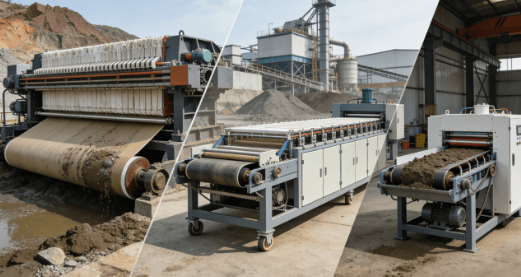
- Differences between mine sludge, desilting sludge, and industrial sludge belt filter presses
- How to evaluate manufacturer credibility through certifications, factory audits, and case studies
- Real-world ROI data and performance benchmarks
- A complete 4-step selection checklist for buyers
- A comparison of belt filter press vs other dewatering technologies
- Maintenance, lifecycle costs, and long-term operational tips
- FAQ section addressing the most common buyer questions
Table of Contents
A Powerful Introduction That Grabs Attention
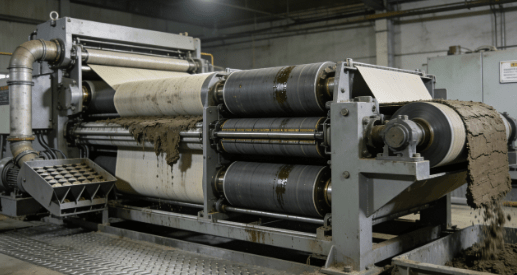
Imagine your wastewater treatment plant produces 20–50 tons of sludge per day, and your current dewatering system leaves sludge cakes with 70% moisture. You’re paying huge transportation costs, facing environmental penalties, and struggling with inconsistent performance. In such scenarios, choosing the right belt filter press manufacturer can be the difference between profit and loss.
In today’s industrial world, sludge dewatering is no longer just a mechanical process — it’s a strategic asset. The right equipment can reduce disposal costs, recover water, improve compliance, and even unlock new revenue streams through waste-to-energy or reuse initiatives. But the market is crowded with manufacturers claiming high efficiency, low cost, and strong performance. So how do you choose?
This guide is built for buyers with real purchasing needs, focusing on the practical aspects that matter: performance, reliability, and long-term cost.
Why Choosing the Right Belt Filter Press Manufacturer Matters
The Real Cost of Choosing the Wrong Manufacturer
Many buyers focus only on price, but the real cost of a poor choice includes:
- Frequent downtime and maintenance
- Poor cake moisture content (higher disposal cost)
- Higher energy consumption
- Reduced system reliability and compliance risk
- Shorter machine lifespan
In the sludge dewatering industry, a belt filter press is not a one-time purchase — it’s a multi-year investment. The manufacturer’s capability to provide consistent quality, service, and technical support determines your total cost of ownership.
What Is a Belt Filter Press and Why It’s Essential for Sludge Dewatering
Belt Filter Press: The Core of Solid-Liquid Separation
A belt filter press is a continuous dewatering system that uses gravity filtration and pressure squeezing to separate solids from liquids. It is widely used in wastewater treatment plants, mining, industrial sludge treatment, and municipal desilting projects.
How It Works (Core Process)
- Stage 1: Gravity Filtration
Sludge is evenly distributed onto a moving filter belt. Gravity removes free water. - Stage 2: Pressure Filtration
The sludge enters a roller press zone. Multi-stage rollers gradually increase pressure to squeeze out remaining water. - Stage 3: Cake Formation
The sludge becomes a compact cake with reduced moisture content, easier for transport and disposal.
Key Performance Indicators (KPIs) for Belt Filter Presses
1. Cake Moisture Content
Lower moisture content directly translates to lower transportation and disposal costs. A good belt filter press can typically reduce moisture content to:
- Industrial sludge: 30–45%
- Mining sludge: 35–50%
- Desilting sludge: 40–55%
Example: A municipal plant processing 30 tons/day of sludge at 70% moisture can reduce disposal volume by nearly 40% when moisture drops to 45%.
2. Throughput Capacity (Tons/day)
This determines how much sludge can be processed per day. For large wastewater plants, throughput capacity is the core requirement.
3. Energy Consumption
A high-efficiency belt filter press should not exceed 0.5–1.2 kWh per ton of sludge processed (varies by sludge type and moisture content).
4. Operational Stability
Operational stability includes:
- Minimal downtime
- Low maintenance frequency
- Stable performance under varying sludge conditions
Types of Belt Filter Presses and Their Typical Uses
Mine Sludge Belt Filter Press (Mining Industry)
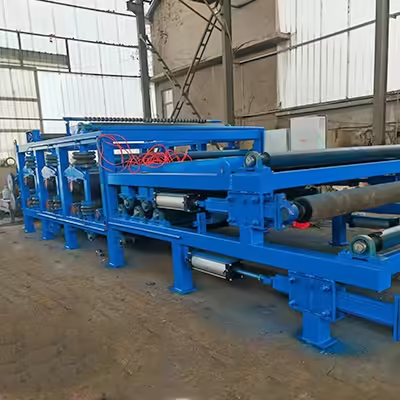
Designed for heavy mineral sludge and tailings. The machine uses gravity + multi-stage pressure to form a low-moisture sludge cake.
Main Application Areas
- Mineral processing plants
- Coal preparation plants
- Tailing ponds and dams
- Underground tunnel sludge dewatering
Advantages
- Strong dewatering ability
- Robust design for harsh environments
- Low maintenance
Desilting Sludge Belt Filter Press (Municipal and Construction)
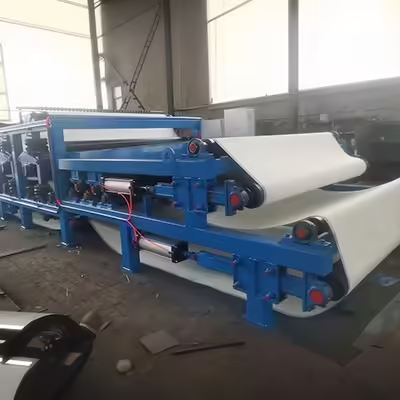
Designed for high-moisture desilting sludge from river dredging, municipal drainage, and construction excavation.
Main Application Areas
- River and lake dredging projects
- Urban drainage sludge
- Waterworks sedimentation sludge
- Infrastructure construction sites
Advantages
- Efficient gravity + pressure system
- Low energy consumption
- Easy operation
Industrial Sludge Belt Filter Press (General Industrial Use)
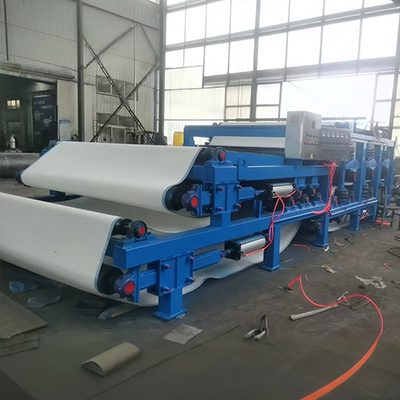
Suitable for municipal wastewater, chemical, textile, food & beverage, and other industrial sludge types.
Main Application Areas
- Wastewater treatment plants
- Chemical and petrochemical plants
- Food and beverage industry
- Textile dyeing plants
Advantages
- Continuous automated operation
- Stable performance
- High adaptability
Comparison: Which Belt Filter Press Fits Your Needs?
Quick Comparison Table
| Type | Best For | Typical Moisture Output | Main Advantage | Typical Cost Range |
|---|---|---|---|---|
| Mine Sludge Belt Filter Press | Mining tailings & heavy sludge | 35–45% | Strong pressure system | High |
| Desilting Sludge Belt Filter Press | Sediment & desilting sludge | 40–50% | Efficient gravity + pressure | Medium |
| Industrial Sludge Belt Filter Press | General industrial sludge | 30–45% | Stable continuous operation | Medium–High |
The Importance of Manufacturer Credibility: What Buyers Should Check
1. Certifications and Factory Qualifications
A credible manufacturer usually has:
- ISO 9001 quality management
- CE certification (for European markets)
- Environmental certifications
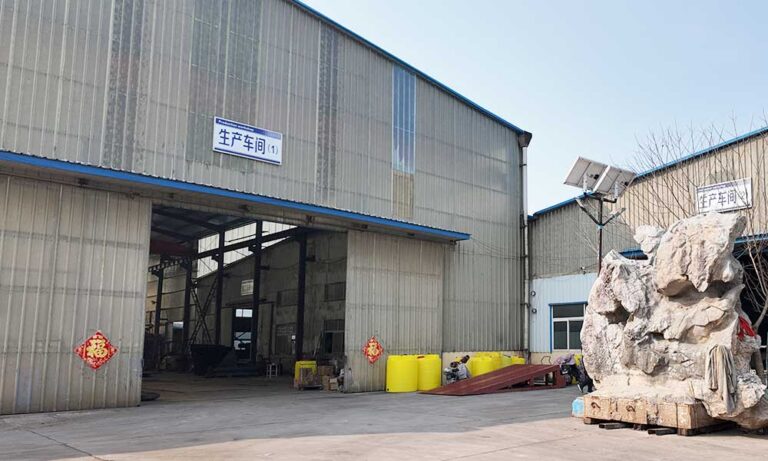
- Factory inspection and audit reports
2. Engineering and R&D Strength
A manufacturer with strong R&D can provide:
- Customization for unique sludge types
- Improved filtration performance
- New material and technology adoption
3. After-Sales Service Network
Good after-sales service includes:
- Spare parts supply
- Onsite commissioning and training
- Remote technical support
- Preventive maintenance programs
Real Case Studies: Proof of Manufacturer Strength
Case Study 1: Mining Company in Inner Mongolia
A mining company faced high sludge volume and strict discharge limits. After installing a mine sludge belt filter press from a Chinese manufacturer, the sludge cake moisture dropped from 60% to 40%, and water recovery increased by 25%. The manufacturer provided onsite installation and training, ensuring stable operation within 2 weeks.
Case Study 2: Municipal Desilting Project in Jiangsu
A city dredging project required fast sludge dewatering. A desilting belt filter press achieved continuous operation for 90 days with no major failures. The key success factor was the manufacturer’s rapid response for spare parts and maintenance support.
Case Study 3: Industrial Plant in Guangdong
A textile factory faced dye sludge disposal problems. After using an industrial belt filter press, the plant reduced sludge disposal cost by 30%, and recovered water reuse rate increased by 18%.
The 4-Step Selection Checklist for Buyers
Step 1: Confirm Your Sludge Type and Output Requirements
- Sludge type (mining, desilting, industrial)
- Daily processing capacity
- Required moisture output
Step 2: Check Manufacturer Credentials
- Factory visits or video audits
- Certifications (ISO, CE, etc.)
- After-sales service network
Step 3: Evaluate the Equipment Design
- Dual-belt system
- Roller pressure gradient design
- PLC control system
- Safety features
Step 4: Confirm After-Sales Support
- Spare parts availability
- Remote technical support
- Onsite installation & training
- Maintenance plan
Technical Design Considerations: What Makes a High-Quality Belt Filter Press?
1. Belt Material and Durability
Filter belt quality determines:
- Filtration efficiency
- Belt lifespan
- Operational stability
High-quality belts can last 2–4 years depending on sludge type and maintenance.
2. Roller Pressure Gradient Design
The pressure gradient affects:
- Cake dryness
- Energy consumption
- Roller wear
A well-designed system has progressive pressure rollers, preventing sudden pressure spikes that damage belts.
3. PLC Control and Automation
Automation reduces:
- Manual operation errors
- Labor cost
- System downtime
A modern belt filter press should support:
- Remote monitoring
- Automatic belt tension control
- Alarm notifications
Cost and ROI: What Buyers Should Know
Capital Cost vs Operating Cost
A belt filter press has two main cost components:
- Capital cost: equipment purchase, installation, and commissioning
- Operating cost: electricity, belts, maintenance, labor
ROI Example (Realistic Estimate)
Assuming:
- Daily sludge: 30 tons
- Disposal cost: $100/ton
- Moisture reduction: 70% → 45%
- Disposal cost saving: 25%
Annual saving:
30 tons/day × 365 × $100 × 25% = $273,750
If equipment cost is $200,000, ROI time can be under 1 year (excluding maintenance and other factors).
Belt Filter Press vs Other Dewatering Technologies (Conceptual Comparison)
Belt Filter Press vs Plate Filter Press
| Feature | Belt Filter Press | Plate Filter Press |
|---|---|---|
| Operation | Continuous | Batch |
| Maintenance | Low | High |
| Suitable for | Large volume sludge | High solid content sludge |
| Investment | Medium | High |
| Energy consumption | Low | Medium |
Belt Filter Press vs Centrifuge
| Feature | Belt Filter Press | Centrifuge |
|---|---|---|
| Energy | Lower | Higher |
| Maintenance | Lower | Higher |
| Cake dryness | Medium | Higher |
| Suitable for | Most sludge types | Specific sludge types |
| Cost | Medium | High |
Common Buyer Mistakes and How to Avoid Them
Mistake 1: Choosing Based Only on Price
A low price may mean poor quality components, weak structure, or inadequate after-sales service. The total cost of ownership can be much higher.
Mistake 2: Ignoring Sludge Characteristics
Sludge with high solids content, high viscosity, or high clay content requires specific design parameters. A generic machine may fail.
Mistake 3: Not Checking Real Project References
Only real project cases can prove the manufacturer’s capabilities. Ask for actual customer contact or site photos.
Maintenance and Lifecycle: Keeping Your Belt Filter Press Running for Years
Weekly Maintenance
- Wipe down surfaces
- Check bolts and screws
- Clean the seat and padding
Monthly Maintenance
- Inspect pivot points
- Check belt tension
- Lubricate moving parts
Annual Maintenance
- Full inspection of frame and welds
- Replace worn parts
- Check roller bearings
Expert Opinions and Industry Insights (Authority Perspective)
1. Industry Experts on Dewatering Efficiency
A sludge treatment consultant in the industry often says:
“The key to efficient dewatering is not only machine pressure but also sludge conditioning and belt filtration system design.”
2. Environmental Regulation Trends
With increasing environmental regulations, more plants are adopting belt filter presses because:
- They reduce sludge volume
- They improve water recovery
- They reduce landfill dependency
3. Technology Trends
Modern belt filter presses are increasingly integrating:
- IoT sensors
- Remote monitoring
- Predictive maintenance
Final Conclusion: What Buyers Should Do Next
When you search for a belt filter press manufacturer, you’re choosing a long-term partner, not just a supplier. The best manufacturers provide:
- Reliable and stable equipment
- Strong engineering and customization ability
- Real project case proof
- Complete after-sales service
If you want a solution that reduces sludge volume, lowers disposal cost, and meets environmental standards, prioritize technical strength and long-term support over short-term savings.
FAQ
What is the main difference between a belt filter press and a filter press?
A belt filter press is continuous and automated, suitable for high-volume sludge. A plate filter press is batch-based and often used for high-solid sludge with higher filtration pressure.
How long does it take to install a belt filter press?
Typically 1–3 weeks depending on site conditions, customization, and the manufacturer’s support.
What is the expected moisture content after dewatering?
Depending on sludge type and machine design, moisture content can be reduced to 30–50% for most sludge types.
How do I judge if a belt filter press manufacturer is reliable?
Check their factory scale, certifications, customer case studies, and after-sales support network. A reliable manufacturer usually provides full project documentation and onsite training.
How to maintain a belt filter press to ensure long service life?
Regular maintenance includes belt cleaning, roller lubrication, checking belt tension, and replacing worn parts. A good manufacturer provides maintenance guidelines.