Key Takeaways for This Blog Post:
- Understanding different wastewater sludge dewatering technologies
- How to choose the right equipment based on sludge type, volume, and organic content
- Comparing Screw Press, DAF Unit, Anaerobic Tower, Grease Traps, and Sedimentation Equipment
- Maintenance strategies for long-term performance
- Cost, energy consumption, and operational considerations
- Practical application scenarios in various industries
- FAQs addressing common operational concerns
- Key considerations for compliance and sustainability
Efficient wastewater sludge dewatering is one of the most critical steps in modern wastewater management. Whether in municipal plants, industrial sites, or food processing facilities, the right sludge dewatering equipment ensures smooth operation, reduces environmental impact, and lowers operational costs. With technologies ranging from mechanical screw presses to biological anaerobic towers, selecting the appropriate solution requires understanding sludge characteristics, treatment goals, and facility constraints.
Table of Contents
Overview of Wastewater Sludge Dewatering
What is Wastewater Sludge Dewatering?
Wastewater sludge dewatering refers to the process of removing excess water from sludge to reduce its volume, improve handling, and facilitate proper disposal or further treatment. Effective dewatering reduces transportation costs, enhances downstream processing, and minimizes environmental risks.
Benefits of Dewatering
- Volume Reduction: Less water means lower disposal and transport costs.
- Environmental Compliance: Ensures that treated sludge meets local and national regulations.
- Operational Efficiency: Prevents clogging in pipes and reduces strain on secondary treatment processes.
- Energy Optimization: Minimizes energy usage in handling and processing sludge.
Key Wastewater Sludge Dewatering Equipment
Screw Press: High-Efficiency Mechanical Dewatering
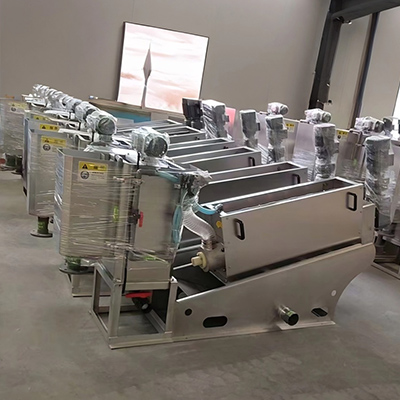
The Screw Press is widely used for continuous sludge dewatering and is known for high efficiency and reliability.
How It Works
- Gravity Filtration: Free water escapes naturally through annular gaps.
- Spiral Extrusion: Axial pressure compresses sludge for deeper water removal.
- Deep Dewatering: Produces low-moisture sludge cakes ready for disposal or further processing.
Advantages
- High dehydration efficiency with minimal energy use
- Fully automatic operation, reducing labor requirements
- No filter cloth required, lowering operational cost
- Compact design suitable for small to medium-sized facilities
Ideal Applications
- Municipal wastewater treatment plants
- Food and beverage processing facilities
- Pulp and paper industries
- Chemical and pharmaceutical plants
DAF Unit: Advanced Flotation for Fine Solids and Oil
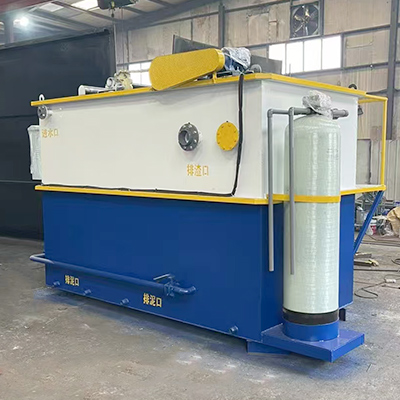
The Dissolved Air Flotation (DAF) Unit uses microbubble flotation to separate suspended solids, oils, and grease.
How It Works
- Pressurized air dissolves into water under high pressure
- Microbubbles attach to contaminants, lifting them to the surface
- Surface scum is removed using skimmers
Advantages
- Efficient removal of fine particles and emulsified oils
- Reduces load on secondary treatment systems
- Compact footprint, ideal for limited space environments
Ideal Applications
- Industrial wastewater from food processing, petrochemical plants
- Municipal pretreatment for high-load industrial influent
- Tannery and leather wastewater with high suspended solids
Anaerobic Tower: Energy-Efficient Biological Dewatering
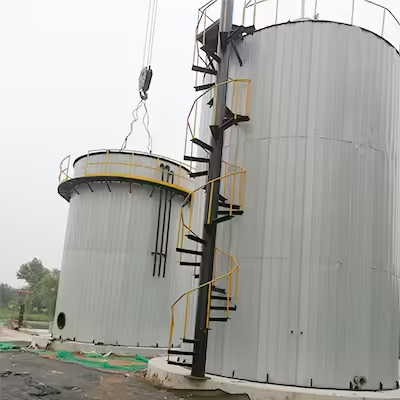
Anaerobic Towers use microorganisms to decompose organic matter while producing biogas energy.
How It Works
- Hydrolysis: Breaks down complex organic macromolecules.
- Acidogenesis: Converts intermediates to volatile fatty acids.
- Methanogenesis: Produces methane (CH₄) and CO₂, reducing sludge volume.
Advantages
- Simultaneous treatment and energy recovery
- Reduced sludge generation, lowering disposal costs
- High COD and BOD removal efficiency
- Compact modular design for space-limited installations
Ideal Applications
- Breweries and beverage industries
- Food and dairy processing plants
- Pulp and paper mills
- Decentralized municipal systems
Grease Trap: Targeted FOG (Fats, Oils, and Grease) Removal
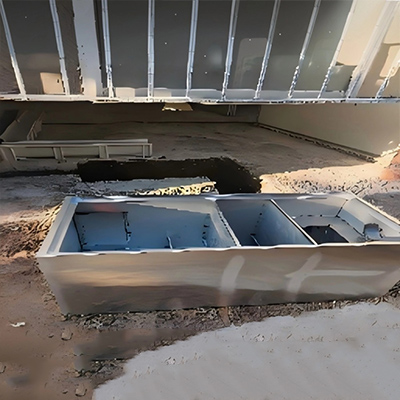
Grease Traps are essential for separating fats, oils, and grease from wastewater, protecting downstream processes.
How It Works
- Physical separation: Gravity and filtration
- Chemical separation: Coalescence or flocculation of oil droplets
- Reduces oil content before wastewater enters treatment systems
Advantages
- Prevents pipe blockages and sewer odor issues
- Reduces maintenance costs for downstream equipment
- Enhances sustainability of water usage
Ideal Applications
- Commercial kitchens, restaurants, cafeterias
- Food processing plants with high FOG content
- Petrochemical facilities handling hydrocarbon-laden wastewater
Sedimentation Equipment: Solid-Liquid Separation for High Load
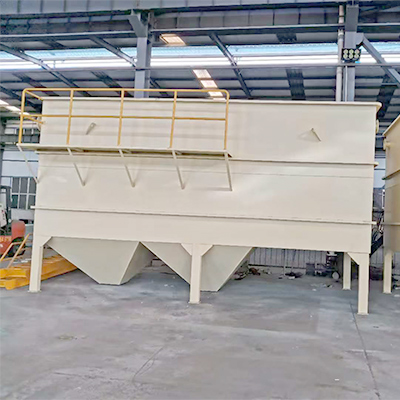
Inclined Tube Sedimentation Equipment optimizes gravity-based settling for faster sludge clarification.
How It Works
- Inclined parallel tubes increase effective settling area
- Suspended solids settle along tube surfaces
- Clear water overflows for further treatment
Advantages
- High separation efficiency with compact footprint
- Rapid solid-liquid separation
- Modular and scalable design for various plant sizes
Ideal Applications
- Municipal water treatment plants
- Industrial wastewater systems
- Food and beverage wastewater pretreatment
- Greywater and recycling facilities
Comparative Overview of Dewatering Equipment
| Equipment | Suitable Sludge Type | Dewatering Efficiency | Space Requirement | Energy Use | Maintenance |
|---|---|---|---|---|---|
| Screw Press | Municipal & industrial | High | Medium | Low | Moderate |
| DAF Unit | Oil-laden & fine solids | High | Low | Medium | Low |
| Anaerobic Tower | Organic-rich sludge | Medium | Medium | Low | Moderate |
| Grease Trap | Fats, oils, grease | Medium | Low | Low | Low |
| Inclined Tube Sedimentation | Solid-heavy wastewater | Medium | Low | Low | Low |
Choosing the Right Equipment
Assess Sludge Type and Volume
High-organic sludge may require anaerobic towers; oily wastewater benefits from DAF Units or grease traps. Low-volume sludge may be effectively treated using sedimentation systems.
Evaluate Space Constraints
- Compact systems: DAF Units, screw presses, grease traps
- Larger systems: Anaerobic towers may need more room
Consider Operational Costs
- Energy consumption
- Maintenance and labor costs
- Consumables such as chemicals or filter media
Compliance and Sustainability
- Ensure compliance with local effluent standards
- Reduce environmental impact through optimized sludge dewatering
- Recover energy where feasible (e.g., anaerobic towers)
Practical Industry Use Cases
Food Processing Facilities
DAF Units and grease traps prevent high FOG and fine solid discharge into municipal systems. Screw presses help reduce sludge volume.
Municipal Wastewater Treatment
Screw presses and sedimentation equipment efficiently manage large-scale sludge, reducing strain on secondary treatment processes.
Industrial Parks
Anaerobic towers treat high-organic wastewater while generating biogas for energy, improving sustainability.
Hospitals and Schools
Compact DAF Units or sedimentation equipment provide efficient dewatering without consuming excess space.
Maintenance Best Practices
- Conduct regular inspections and cleaning
- Monitor sludge moisture content for consistent operation
- Replace worn mechanical components, such as spiral shafts or skimmer blades
- Maintain proper chemical balance in biological systems
- Track operational data to optimize energy use and dewatering efficiency
FAQ
Q1: How often should sludge dewatering equipment be serviced?
A1: Maintenance depends on equipment type and sludge load, typically ranging from weekly inspections to monthly deep cleaning.
Q2: Can multiple dewatering technologies be combined?
A2: Yes, hybrid setups like DAF + Screw Press optimize efficiency for complex wastewater streams.
Q3: What moisture content is achievable after dewatering?
A3: Screw Presses can reduce moisture to 25–40%; DAF Units provide moderate reduction depending on sludge type.
Q4: Is energy consumption significant?
A4: Modern equipment is energy-efficient; anaerobic towers can generate renewable energy through biogas.
Q5: How to decide between Screw Press and Anaerobic Tower?
A5: Consider sludge type, organic content, space, energy recovery needs, and long-term operational goals.
Conclusion
Selecting the right wastewater sludge dewatering equipment is essential for efficient wastewater management. By understanding the types of sludge, operational constraints, and available technologies—including Screw Presses, DAF Units, Anaerobic Towers, Grease Traps, and Sedimentation Equipment—facilities can optimize treatment efficiency, reduce costs, and achieve compliance with environmental standards. Proper maintenance, combined with a strategic choice of equipment, ensures long-term operational success while supporting sustainable water and energy practices.
Whether managing municipal, industrial, or food processing wastewater, investing in the right sludge dewatering solution is an essential step toward efficient, compliant, and environmentally responsible operations.