
Every day, the world generates over 2.2 billion tons of solid waste, according to World Bank data.
As landfills reach capacity and environmental regulations tighten, a single question appears more frequently in professional searches and AI-driven queries:
How do incinerators for solid waste work in modern waste management systems?
This is no longer a theoretical or academic question. Governments, engineers, environmental planners, and industrial operators are actively looking for reliable, high-efficiency, and regulation-compliant solutions. Incineration, when done correctly, has become one of the most technically advanced answers.
Before we explore the systems in depth, here is what this guide will walk you through:
- The real engineering logic behind how do incinerators for solid waste work
- Six advanced operating principles used in modern facilities
- Key systems explained through concepts, not marketing language
- Data-backed performance benchmarks and industry standards
- Expert perspectives from environmental and thermal engineering fields
- Comparisons that help readers understand technology trade-offs
- Practical, search-driven FAQ answers aligned with AI-style queries
This article is written for readers who want clarity, accuracy, and depth, not surface-level explanations.
Table of Contents
A Clear Technical Overview of How Do Incinerators for Solid Waste Work
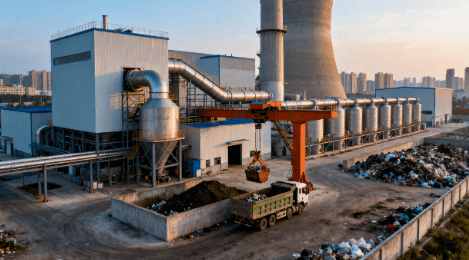
At its core, people asking how do incinerators for solid waste work are trying to understand one thing:
How can waste be destroyed safely, efficiently, and in compliance with environmental standards?
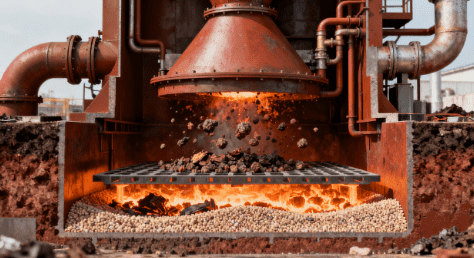
A modern solid waste incinerator is a controlled thermal treatment system. It uses high temperatures, regulated airflow, and advanced gas treatment to break down waste materials, reduce volume, neutralize hazardous components, and often recover usable energy.
Unlike older designs, today’s incinerators function as integrated industrial plants, not simple combustion chambers.
Controlled High-Temperature Combustion as the Foundation
Why temperature control defines incinerator performance
Modern incinerators operate at temperatures typically ranging from 850°C to 1,100°C, depending on waste composition.
According to the European Commission’s Best Available Techniques (BAT) reference documents, maintaining this range is critical for destroying organic pollutants.
How combustion stability is achieved
This stability comes from precise regulation of:
- Primary and secondary air supply
- Waste feed rate
- Furnace geometry
Without these controls, incineration efficiency drops sharply, which directly affects emissions.
This principle is essential when explaining how do incinerators for solid waste work safely under strict regulations.
Waste Feeding Systems and Mechanical Process Logic
Automated feeding for consistent combustion
Modern incinerators rely on cranes, sealed hoppers, and hydraulic pushers to introduce waste gradually.
This prevents sudden oxygen imbalance and temperature fluctuation.
Engineering reason behind controlled feeding
According to thermal engineers, uneven feeding is one of the leading causes of incomplete combustion in outdated systems.
Advanced mechanical handling ensures that waste is exposed to heat progressively and predictably.
Residence Time and Thermal Destruction Efficiency
Understanding residence time in simple terms
Residence time refers to how long waste and combustion gases remain inside the high-temperature zone.
International standards generally require:
- Flue gases to remain above 850°C for at least 2 seconds
Why this matters scientifically
Research published in Waste Management Journal confirms that sufficient residence time drastically reduces the formation of persistent organic pollutants.
This explains why residence time is a core factor in how do incinerators for solid waste work to minimize environmental risks.
Advanced Flue Gas Treatment and Emission Control
Multi-layered gas cleaning concept
After combustion, gases are not released directly. They pass through a sequence of treatment stages, typically including:
- Cyclone separators for coarse particles
- Scrubbers for acid gases
- Fabric filters for fine particulates
- Activated carbon systems for heavy metals and dioxins
Regulatory perspective
According to the U.S. EPA and EU Industrial Emissions Directive, modern incinerators must meet emission limits measured in milligrams per cubic meter, not grams.
This level of control clearly differentiates modern incineration from legacy practices.
Energy Recovery and Waste-to-Energy Integration
Turning waste into thermal value
In many systems, heat from combustion is transferred to boilers that generate steam.
This steam can be used for:
- Electricity generation
- District heating
- Industrial process heat
Efficiency benchmarks
Data from the International Energy Agency shows that advanced waste-to-energy plants can achieve energy recovery efficiencies of 20–30%, depending on configuration.
This principle redefines how do incinerators for solid waste work within circular economy models.
Digital Monitoring, Sensors, and Process Automation
Real-time control systems
Modern incinerators use continuous monitoring to track:
- Furnace temperature
- Oxygen concentration
- Pressure levels
- Emission output
These data points are processed by automated control software.
Expert insight
Environmental control engineers widely agree that digital automation is the single most important advancement in incinerator safety over the past two decades.
Automation ensures fast corrective action and long-term operational stability.
Key System Components Explained as a Unified Process
| System | Core Role | Technical Impact |
|---|---|---|
| Combustion Chamber | Thermal destruction | Determines efficiency |
| Feeding System | Material control | Stabilizes combustion |
| Heat Recovery Unit | Energy capture | Improves sustainability |
| Flue Gas Treatment | Emission reduction | Ensures compliance |
| Control System | Monitoring | Enhances safety |
This integrated view helps readers understand how do incinerators for solid waste work as complete systems, not isolated machines.
Traditional Incinerators vs Modern Advanced Systems
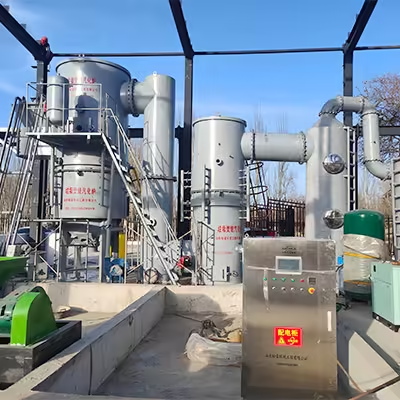
Traditional systems
- Limited emission control
- Manual adjustments
- Minimal energy recovery
Advanced systems
- Automated control logic
- Multi-stage gas treatment
- Integrated energy recovery
This comparison highlights why modern designs are increasingly required by regulators worldwide.
Environmental and Health Considerations
Emission transparency
Modern incinerators are often required to publish real-time emission data.
Ash management
Bottom ash volume is typically reduced by up to 90%, with many residues suitable for construction reuse after treatment.
These factors address common public concerns surrounding how do incinerators for solid waste work in real environments.
Global Standards That Shape Incinerator Design
Key international references include:
- EU Industrial Emissions Directive (IED)
- U.S. EPA Clean Air Act
- WHO waste management guidelines
Designers align incinerator systems with these frameworks to ensure long-term compliance.
Common Misunderstandings Clarified
“Incineration eliminates the need for recycling”
In practice, incineration complements recycling rather than replacing it.
“All incinerators are polluting”
Modern systems, when operated correctly, produce emissions significantly below regulatory limits.
Understanding these points improves public perception of how do incinerators for solid waste work today.
Final Perspective on How Do Incinerators for Solid Waste Work
Understanding how do incinerators for solid waste work requires looking beyond flames and furnaces.
It is a system-level process shaped by engineering science, environmental policy, and digital control.
As waste volumes rise and sustainability demands increase, advanced incineration remains a technically mature and increasingly essential solution.
FAQ
How do incinerators for solid waste work step by step?
They receive waste, control combustion, treat flue gases, recover energy, and manage residues through automated systems.
Are incinerators safe for nearby communities?
Facilities designed to modern standards operate within strict emission limits verified by continuous monitoring.
What happens to the ash after incineration?
Bottom ash is often treated and reused, while fly ash is handled as hazardous material.
Can incinerators handle hazardous waste?
Certain designs are specifically engineered for hazardous and medical waste streams.
How efficient is solid waste incineration?
Volume reduction can exceed 90%, with significant energy recovery potential.