
Key Takeaways of This Article
- Understand the critical role of wastewater preliminary treatment in protecting downstream processes and ensuring regulatory compliance.
- Explore the key types of equipment: grease traps, inclined tube sedimentation, bar screens, grit chambers, oil-water separators, and automated monitoring systems.
- Learn about industry-specific applications, real-world case studies, and performance benchmarks.
- Compare equipment performance, operational costs, and ROI for better procurement decisions.
- Discover best practices for system integration, maintenance, and future-proofing your wastewater treatment investment.
- Access a comprehensive FAQ addressing common questions in purchasing and operational management.
Table of Contents
Introduction
Effective wastewater management begins with preliminary treatment, which is often overlooked yet essential for safeguarding both operations and compliance. Industries from food processing to petrochemical manufacturing generate wastewater that contains:
- Suspended Solids: Sand, silt, and industrial debris that can clog pumps and pipelines.
- FOG (Fats, Oils, and Grease): High concentrations from kitchens, food plants, and chemical processing.
- Chemical Contaminants: Hydrocarbons, detergents, and process chemicals that affect downstream biological or chemical treatments.
According to the International Water Association (IWA), inadequate preliminary treatment contributes to approximately 35% of wastewater treatment inefficiencies, highlighting the importance of well-chosen equipment. For procurement specialists and engineers, selecting the right combination of treatment units can reduce operational costs, improve compliance, and ensure long-term sustainability.
Understanding Wastewater Composition and Treatment Objectives
Key Contaminants in Wastewater
- Suspended Solids: Particles such as sand, food remnants, and industrial debris that need to be removed before biological or chemical treatment.
- FOG (Fats, Oils, Grease): Generated from restaurants, food production, and petrochemical processes. FOG can clog pipes, damage pumps, and reduce treatment efficiency.
- Dissolved Chemicals: Organic and inorganic chemicals that can disrupt downstream biological treatment processes.
Primary Goals of Preliminary Treatment
- Remove solids and FOG before biological or chemical processing.
- Protect pumps, pipelines, and other downstream equipment.
- Optimize efficiency, reducing energy and chemical usage.
- Ensure regulatory compliance for effluent discharge.
Procurement Perspective
When purchasing preliminary treatment equipment, decision-makers should consider:
- Flow rate capacity (average vs peak flow).
- Wastewater composition and seasonal variations.
- Footprint and installation flexibility.
- Integration with existing or planned treatment systems.
- Maintenance requirements and life-cycle costs.
Core Equipment for Wastewater Preliminary Treatment
Grease Traps – Essential for FOG Management
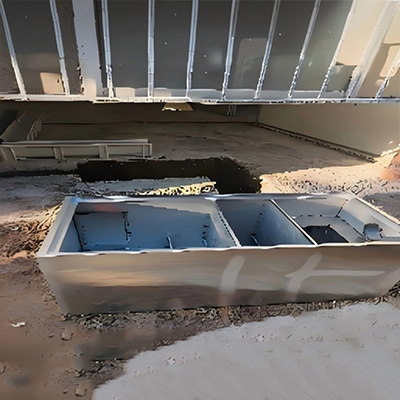
Concept and Operation
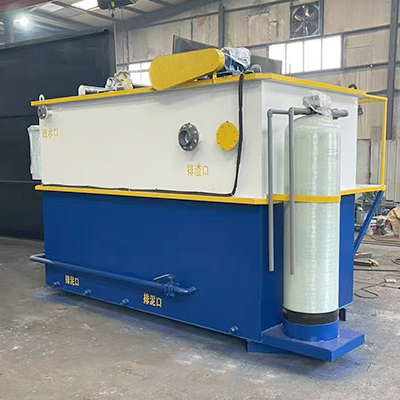
A grease trap is a specialized device designed to remove oils, fats, and grease (FOG) from wastewater before it enters the main treatment system. Grease traps use:
- Physical separation: Gravity settling of FOG.
- Chemical methods: Coalescence or flocculation to aggregate oils for easier removal.
This protects downstream pumps, pipelines, and biological treatment units from blockages and excessive wear.
Key Functions
- Oil-Water Separation: Ensures cleaner wastewater entering the next treatment stage.
- System Protection: Prevents clogs and mechanical damage.
- Operational Efficiency: Reduces load on downstream systems.
- Regulatory Compliance: Helps meet local and national effluent standards.
Industry Applications
- Catering and Restaurants: Prevents kitchen FOG from overwhelming municipal sewer systems.
- Food Processing Plants: Handles meat, dairy, and snack production effluent.
- Petrochemical Plants: Separates hydrocarbons from process water.
- Hospitals and Schools: Centralized kitchens benefit from efficient FOG removal.
Advantages
- Reduces sewer blockage and odor problems.
- Lowers maintenance and operational costs.
- Increases lifespan of pumps and treatment tanks.
Technical Specifications
| Parameter | Value |
|---|---|
| Lifting Method | Water pump delivery |
| Machine Dimensions | 3600mm × 1500mm × 1300mm |
| Packaging Dimensions | 3700mm × 1600mm × 1300mm |
| Machine Weight | 920kg |
| Packaging Weight | 960kg |
Inclined Tube Sedimentation Equipment – Rapid Clarification
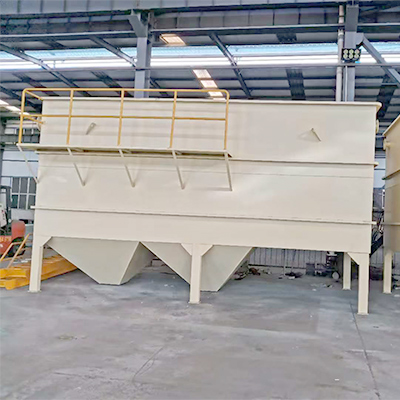
Concept
Inclined tube sedimentation systems utilize shallow-layer sedimentation theory to enhance the settling of suspended solids. Tubes arranged at 60° angles maximize the effective settling area, allowing particles to settle quickly while clean water overflows.
Functions
- Shallow-Layer Sedimentation: Short retention paths for faster separation.
- Increased Settling Area: Multiple tubes increase the effective sedimentation surface.
- Gravity-Assisted Settling: Improves particle removal efficiency.
- Process Optimization: Reduces load on downstream filtration.
Applications
- Municipal water treatment plants
- Industrial wastewater (mining, electroplating, paper, chemical processing)
- Food and beverage wastewater
- Agricultural runoff and irrigation
- Greywater recovery systems
Advantages
- Compact footprint saves construction space.
- High flow capacity with short retention time.
- Modular and scalable for different site conditions.
Technical Specifications
| Parameter | Value |
|---|---|
| Lifting Method | Water pump delivery |
| Machine Dimensions | 6500mm × 3500mm × 3000mm |
| Packaging Dimensions | 7000mm × 4000mm × 3000mm |
| Machine Weight | 6500kg |
| Packaging Weight | 7000kg |
| Tube Diameter | 25–60mm |
Bar Screens and Grit Chambers – Solid and Grit Removal
Bar Screens
- Remove large debris before treatment.
- Protect downstream pumps and pipelines.
- Available in manual, semi-automatic, and fully automatic configurations.
Grit Chambers
- Settle heavy inorganic particles like sand, gravel, and silt.
- Prevent abrasion and wear in pumps and other treatment equipment.
- Often used in combination with bar screens for optimal preliminary treatment.
Oil-Water Separators – Hydrocarbon Management
Concept
Oil-water separators efficiently remove hydrocarbons from wastewater streams in:
- Petrochemical plants
- Service stations
- Industrial process water systems
Advantages
- Removes up to 95% of free oils
- Reduces chemical usage in downstream treatment
- Protects biological treatment and filtration systems
Comparative Analysis – Choosing the Right Equipment
Selection Criteria
- Wastewater composition: solids, FOG, chemical load
- Flow rate: average and peak
- Available footprint and installation space
- Integration with existing treatment systems
- Operational cost vs ROI
- Maintenance frequency and complexity
Equipment Comparison Table
| Equipment Type | Best For | Advantages | Limitations |
|---|---|---|---|
| Grease Trap | Kitchens, food processing | Low cost, easy maintenance | FOG only |
| Inclined Tube Sedimentation | High suspended solids | Fast, compact, scalable | Moderate installation cost |
| Bar Screens | Large debris removal | Prevents clogs | Needs frequent cleaning |
| Grit Chambers | Sand, gravel | Protects pumps | Requires space |
| Oil-Water Separators | Hydrocarbon wastewater | High efficiency, compliance | Higher upfront cost |
System Integration and Design Considerations
Multi-Stage Configurations
- Common sequence: Bar Screen → Grit Chamber → Grease Trap → Inclined Tube Sedimentation → Oil-Water Separator
- Integrating IoT-enabled sensors and automated control optimizes operational efficiency and reduces manual intervention.
Monitoring and Predictive Maintenance
- Flow meters, turbidity sensors, and real-time data dashboards enhance performance tracking.
- Predictive maintenance reduces downtime and operational costs.
- Historical data facilitates regulatory reporting and performance benchmarking.
Cost and ROI Analysis
Capital Investment vs Long-Term Savings
- Preliminary treatment equipment reduces damage to downstream systems, saving on pump and membrane replacements.
- Energy savings: reducing FOG and solids load decreases energy consumption in biological treatment.
- Avoidance of fines and non-compliance penalties adds intangible value.
ROI Example
| Equipment Type | Capital Cost | Annual Operational Savings | ROI (Years) |
|---|---|---|---|
| Grease Trap | $10,000 | $3,000 | 3.3 |
| Inclined Tube Sedimentation | $150,000 | $45,000 | 3.3 |
| Oil-Water Separator | $50,000 | $15,000 | 3.3 |
Note: ROI varies depending on wastewater composition, flow, and local labor/energy costs.
Industry Case Studies
Food Processing Plant
- Challenge: High FOG content and suspended solids.
- Solution: Combination of bar screens, grease traps, and inclined tube sedimentation.
- Result: 40% reduction in pump maintenance costs, 25% lower energy consumption.
Petrochemical Facility
- Challenge: Hydrocarbon-laden wastewater impacting biological treatment.
- Solution: Oil-water separator + grit chamber.
- Result: 95% oil removal efficiency, compliant effluent, and extended pump lifespan.
Future Trends and Innovations
Smart and Automated Systems
- IoT-enabled monitoring
- Predictive maintenance to reduce downtime
- Data-driven process optimization
Resource Recovery
- Reuse clarified water for irrigation or industrial cooling
- Convert FOG and organic solids into biofuels
Modular and Scalable Equipment
- Phased expansion reduces initial capital investment
- Adaptable to increased flow or seasonal variations
Conclusion
Effective wastewater preliminary treatment is a strategic investment that safeguards downstream systems, ensures compliance, and optimizes operational efficiency. By carefully selecting and integrating the right combination of equipment, industries can:
- Protect infrastructure and extend equipment lifespan
- Reduce operational and maintenance costs
- Achieve regulatory compliance
- Implement scalable and sustainable wastewater management
Investing in modern preliminary treatment equipment allows companies to reduce risk, save costs, and enhance environmental responsibility while preparing for future industrial and municipal wastewater challenges.
FAQ
Is preliminary treatment always necessary?
Yes, particularly for wastewater with high solids, FOG, or chemical contaminants. Wastewater preliminary treatment is essential to protect downstream processes and ensure compliance with regulations.
How often should grease traps be maintained?
Typically every 1–4 weeks, depending on load. Regular maintenance is critical for effective wastewater preliminary treatment and preventing pipeline blockages.
Can multiple systems be combined?
Absolutely. Common practice combines bar screens, grit chambers, grease traps, sedimentation, and oil-water separators for comprehensive wastewater preliminary treatment.
How to monitor efficiency in real time?
Use turbidity sensors, flow meters, and IoT-enabled dashboards. Modern wastewater preliminary treatment systems increasingly integrate real-time monitoring for optimal performance.
How to calculate ROI for preliminary treatment equipment?
Factor in capital investment, operational savings, maintenance reduction, energy savings, and compliance cost avoidance. A well-designed wastewater preliminary treatment setup can provide substantial long-term ROI.
What are the emerging trends in wastewater preliminary treatment?
- Automation and IoT integration
- Resource recovery (e.g., FOG to biodiesel)
- Modular and scalable equipment designs
- Energy-efficient systems
Can wastewater preliminary treatment reduce environmental penalties?
Yes, proper preliminary treatment removes solids, FOG, and hazardous chemicals, helping facilities comply with discharge regulations and avoid fines.
How do I choose the right wastewater preliminary treatment system?
Consider wastewater composition, flow rates, available space, integration capability, and maintenance requirements. Tailoring the system ensures maximum efficiency and cost-effectiveness.
What is the typical lifespan of preliminary treatment equipment?
Most equipment, such as grease traps and sedimentation units, can last 10–15 years with regular maintenance, making wastewater preliminary treatment a long-term investment.
Can preliminary treatment handle industrial peak flows?
Yes, systems can be scaled or combined to handle peak flows without compromising efficiency, ensuring reliable wastewater preliminary treatment during high-demand periods.
How often should monitoring sensors in wastewater preliminary treatment be calibrated?
Sensors should be calibrated every 3–6 months depending on wastewater load and system sensitivity. This ensures accurate real-time performance monitoring.
Are there cost-effective solutions for small-scale wastewater preliminary treatment?
Yes, compact grease traps, modular bar screens, and small sedimentation units can provide effective wastewater preliminary treatment for smaller facilities while keeping initial investment low.
Does wastewater preliminary treatment support downstream biological treatment?
Absolutely. By removing solids, grease, and sand, preliminary treatment reduces stress on biological reactors, improving efficiency and extending the life of biological treatment systems.