
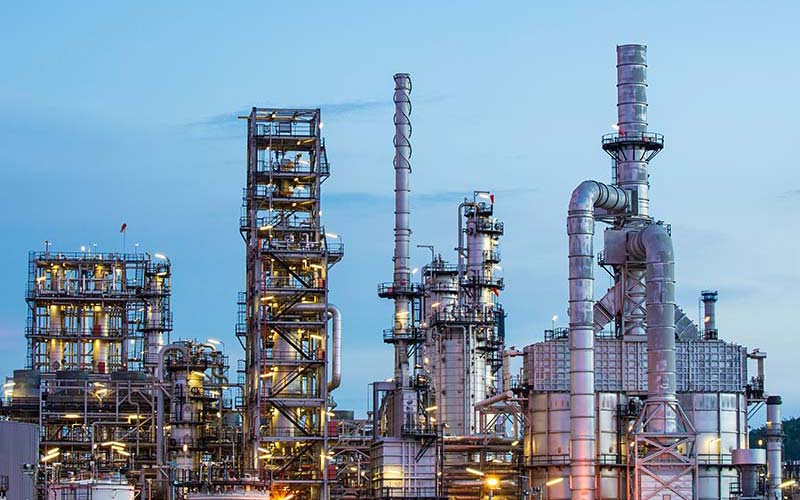
Recently, a major municipal wastewater plant in New York successfully reduced sludge disposal volume by 35% using advanced dewatering techniques, drawing attention to the critical role of sludge management in urban water treatment. Wastewater sludge dewatering is a crucial step in modern sewage treatment, involving the removal of water from sludge to reduce volume, lower disposal costs, and improve resource recovery.
Table of Contents
Introduction
Efficient dewatering allows treatment plants to handle larger quantities of sludge while reducing environmental impact. Beyond cost savings, it prepares sludge for energy recovery, composting, or safe land application, making it a key component of sustainable wastewater management.
What is Wastewater Sludge Dewatering?
Concept of Sludge Dewatering
Wastewater sludge dewatering is the process of removing free and bound water from sewage sludge. By increasing solid content, sludge becomes easier to handle, transport, and process further, enabling more efficient downstream treatment.
Key Elements in Dewatering
- Moisture Content: The primary indicator of dewatering efficiency.
- Solid Content (TS): Higher total solids indicate better water removal.
- Sludge Composition: Organic-rich sludge behaves differently than inorganic sludge in dewatering processes.
How Do Wastewater Treatment Plants Dewater Sludge?
Common Dewatering Methods
Gravity Thickening
A preliminary step that allows sludge solids to settle under gravity, reducing volume before mechanical treatment.
Mechanical Dewatering
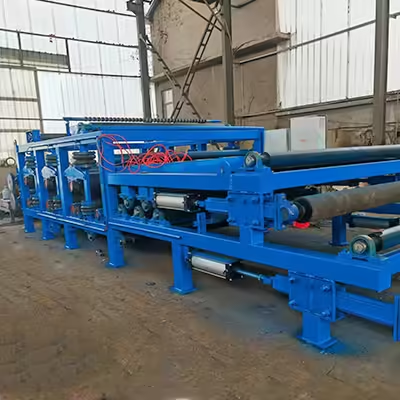
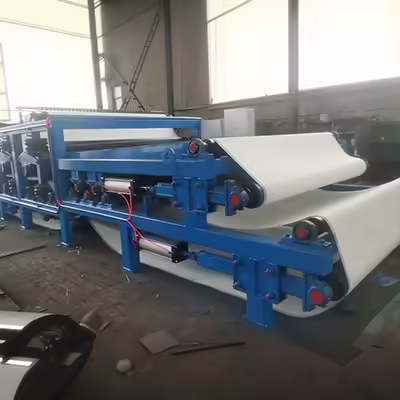
- Belt Filter Press: Compresses sludge to remove water; ideal for large-scale plants.
- Centrifuge: Spins sludge for separation; highly efficient but energy-intensive.
- Plate and Frame Filter Press: Achieves high solids concentration, suitable for very wet sludge.
Chemical Conditioning
Polymers or coagulants are added to improve sludge structure and enhance dewaterability.
Dewatering Process Flow
- Sludge Concentration: Pre-thickening using gravity or flotation.
- Chemical Treatment: Adjust pH and add flocculants.
- Mechanical Separation: Centrifuge, belt press, or filter press.
- Final Disposal or Resource Recovery: Landfill, incineration, or fertilizer.
Elements of Dewatering Technology
Physical Methods
Use gravity, compression, or centrifugal force to remove water effectively.
Chemical Methods
Flocculation and coagulation help particles bind together, enhancing water removal.
Thermal and Advanced Methods
Thermal drying or solar drying can further reduce water content, though at higher energy costs.
Comparing Dewatering Techniques
| Method | Advantages | Disadvantages | Typical Solids Content |
|---|---|---|---|
| Belt Filter Press | Low maintenance, continuous operation | Moderate solids content | 18–25% |
| Centrifuge | Fast, compact | High energy, expensive | 20–30% |
| Plate & Frame Press | High solids, good for thick sludge | Labor-intensive, batch process | 30–40% |
| Thermal Drying | Very high solids, pathogen reduction | High energy consumption | 80–90% |
This comparison helps plants choose the right technology based on sludge type, budget, and desired solid content.
Key Performance Elements in Dewatering
Solid Content (TS)
Indicates efficiency of water removal and impacts further processing.
Moisture Content
Lower moisture content reduces weight, transportation, and disposal costs.
Filtrate Quality
Separated water must meet environmental standards before discharge or reuse.
Energy and Cost Considerations
High-efficiency systems may require more energy or chemicals, requiring balance between performance and cost.
Common Challenges in Sludge Dewatering
Poor Dewaterability
High organic content or activated sludge can be sticky, reducing efficiency.
Equipment Wear and Clogging
Filters, centrifuges, and presses require regular maintenance to avoid downtime.
Chemical Use and Costs
Flocculants improve dewatering but can increase operational costs and environmental load.
Filtrate Management
The water removed often contains contaminants requiring additional treatment.
Optimizing Wastewater Sludge Dewatering
Process Improvements
Pre-thickening, chemical optimization, and blending sludge types can enhance performance.
Equipment Upgrades
Modern centrifuges or automated filter presses reduce energy use and labor.
Resource Recovery
Recovered sludge solids can be used for energy, fertilizer, or construction materials.
Digital Monitoring
Sensors and AI-assisted controls allow real-time optimization of dewatering processes.
Belt Filter Press: Desilting Sludge Solution
For facilities dealing with high-moisture desilting sludge, the Desilting Sludge Belt Filter Press from Shandong Lushun Environmental Technology Co., Ltd. provides a reliable and efficient solution.
Key Features
- Gravity Filtration: Effectively removes free water during the initial stage, reducing sludge volume.
- Pressure Dewatering: Multi-stage rollers compress sludge into low-moisture, dense cakes, enhancing handling and transport.
- Continuous Operation: Designed for minimal labor and energy consumption, ensuring stable and consistent performance.
- Wide Applications: Ideal for municipal desilting projects, waterworks sedimentation, construction sites, mining, and agricultural irrigation canals.
Company Overview
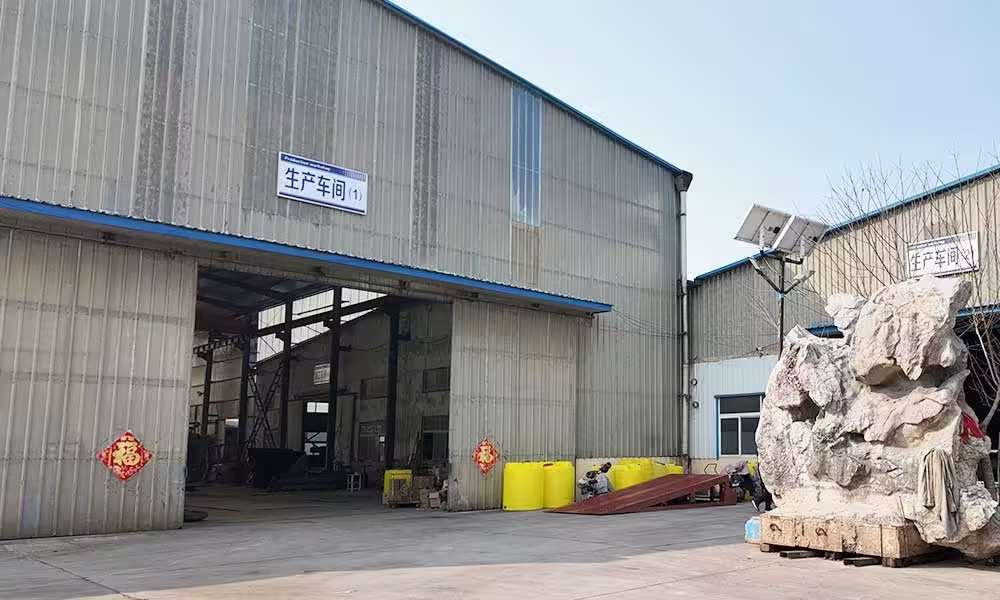
Shandong Lushun Environmental Technology Co., Ltd. is a leading environmental protection technology enterprise that integrates technological innovation, equipment manufacturing, and comprehensive supply of environmental solutions. Guided by high-tech environmental protection standards and leveraging advanced international technologies, the company continuously improves and innovates its product line. Its competitive range of environmental protection equipment ensures market leadership and reliable performance for clients worldwide.
Benefits
- High-efficiency solid-liquid separation
- Reduced sludge disposal volume and costs
- Dense, stable sludge cakes for easier transport and reuse
- Customizable solutions to meet different sludge types and treatment capacities
By combining advanced dewatering technology with Shandong Lushun’s expertise in environmental protection, the Desilting Sludge Belt Filter Press ensures efficient sludge management, cost savings, and regulatory compliance in diverse industrial and municipal applications.
Conclusion
Wastewater sludge dewatering is essential for modern sewage treatment, improving operational efficiency, reducing environmental impact, and enabling resource recovery. By understanding technologies, performance elements, and challenges, treatment plants can optimize sludge management strategies.
If your facility needs reliable sludge dewatering equipment, contact us today to learn more about our Desilting Sludge Belt Filter Press and other high-efficiency solutions designed for municipal and industrial applications.
FAQ
What is the best method for sludge dewatering?
Depends on sludge type, budget, and desired solid content. Centrifuges are fast but costly; belt presses are economical for large volumes.
Why is sludge hard to dewater sometimes?
High organic content, small particle size, or insufficient chemical conditioning can reduce efficiency.
How much water can be removed from sludge?
Mechanical dewatering typically reduces moisture to 70–80%, while thermal drying can reach 10–20%.
Can sludge dewatering be environmentally friendly?
Yes. Optimized chemical use, energy-efficient equipment, and reuse of solids all contribute to sustainability.
How do I choose between centrifuge and belt filter press?
Compare solids content needs, energy costs, operation complexity, and sludge characteristics. Centrifuges are faster; belt presses are cheaper for long-term operation.